Water Filtration vs. Water Softener: What’s the Difference?
It's a common assumption: if a house already has a whole-house filter, it doesn't need a softener, or that if the softener is running, the water must already be clean. Neither is true. A water softener and a water filtration system solve two different problems that happen to show up in the same water supply, and installing one instead of the other usually means the original complaint never actually goes away. Understanding what each one removes and how makes it a lot easier to tell which problem you're dealing with and whether you need one system, the other, or both working together.
What Hardness Actually Is, and Why Filters Don't Touch It
Hard water isn't dirty water. It's water carrying dissolved calcium and magnesium minerals picked up as groundwater moves through rock and soil on its way into the well. Those minerals are dissolved at the molecular level, not suspended particles, so a standard sediment or carbon filter has nothing to catch.
The water can run perfectly clear through a filter and still leave scale on faucets, film on shower doors, and buildup inside a water heater because the minerals that cause that scale pass straight through a filter designed to trap solids and organic compounds, not dissolved ions. Hardness is usually reported in grains per gallon, and a well testing above roughly seven grains per gallon is generally considered hard enough that most households start noticing the effects on fixtures and appliances.
How a Softener Actually Removes Hardness
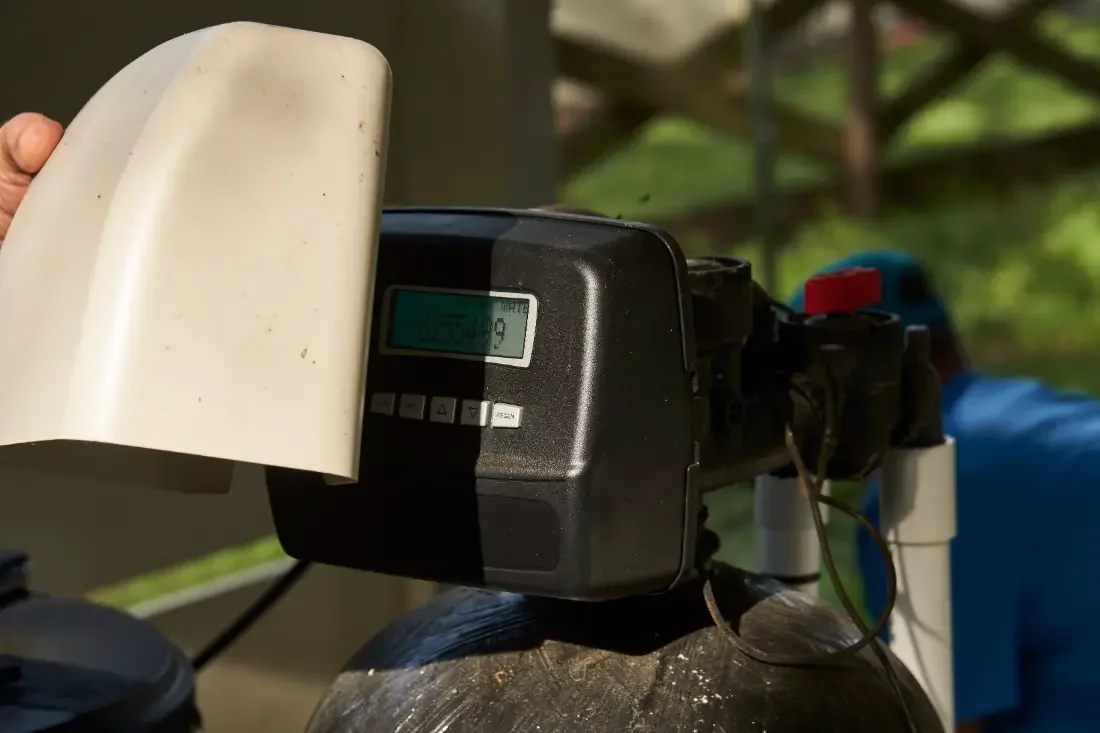
A water softener works through a process called ion exchange. Inside the softener's resin tank, thousands of small resin beads are coated with sodium or potassium ions. As hard water passes through the tank, the resin beads exchange their sodium ions for the calcium and magnesium ions in the water, removing hardness and releasing softened water on the other side.
Over time, the resin beads run low on sodium to trade, so the softener periodically runs a regeneration cycle, flushing a concentrated brine solution from its brine tank back through the resin to recharge it with fresh sodium before the next cycle of use. That regeneration cycle, not a filter cartridge, is the reason softeners need periodic salt refills. Most residential units are sized by resin capacity, measured in grains, and an undersized softener for a household's water use and hardness level will regenerate more often than it should, burning through salt faster than a correctly sized unit would.
What Filtration Actually Removes
Filtration systems cover a much wider range of equipment, and what they remove depends entirely on the media inside. A sediment filter uses a wound or pleated cartridge, usually rated between 5 and 20 microns, to physically strain out sand, silt, and rust particles before they reach fixtures and appliances. Carbon filtration uses activated carbon media to adsorb chlorine taste, certain organic compounds, and some of the tannins that give well water a tea-colored tint. Iron and manganese filters typically use an oxidizing media bed, sometimes paired with an air injection system, to convert dissolved iron and manganese into solid particles that then get trapped and flushed out during a backwash cycle.
None of these systems touch dissolved calcium or magnesium, because that's not what they're built to catch. A carbon filter can make water taste noticeably better, and a sediment cartridge can turn cloudy water perfectly clear, yet the same water still leaves scale on a shower door the next morning, because taste, clarity, and hardness are three separate things addressed by three different mechanisms.
Why Sulfur Smell Needs Its Own Approach
Sulfur odor is a good example of why matching the right equipment to the right problem matters. The rotten-egg smell in well water usually comes from dissolved hydrogen sulfide gas, and neither a standard sediment filter nor a softener resin bed is built to remove it. It typically uses an aeration system that injects air into the water to oxidize the sulfide gas so it can be vented, or a catalytic carbon media bed specifically designed to break down hydrogen sulfide on contact.
Installing a softener to fix a sulfur smell, or a sediment filter to fix water hardness, leaves the original complaint fully in place because the equipment was never built to touch that particular problem.
Signs You're Dealing With a Hardness Problem vs a Filtration Problem
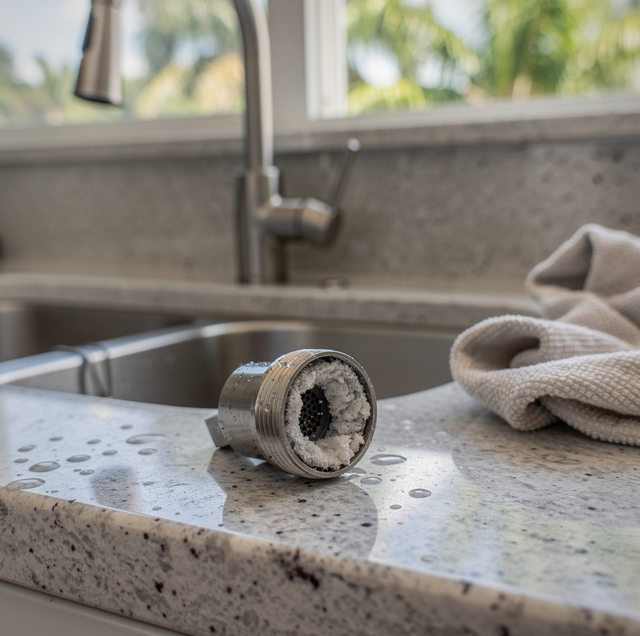
The clearest signal is what the water is actually doing. Chalky white buildup around faucet aerators and showerheads, a film on dishes straight out of the dishwasher, and soap that won't work up a lather all point toward hardness, which calls for a softener. Cloudy or discolored water, a metallic or rotten-egg taste and smell, or visible grit settling at the bottom of a glass point toward particulate or dissolved-gas problems, which call for filtration, whether that's a sediment cartridge, a carbon bed, or an aeration system depending on exactly what's showing up.
Many well systems need both: a filtration stage to handle sediment, iron, or odor, feeding into a softener that handles hardness on water that's already had the particulates and dissolved gases dealt with.
Filtration vs Softening at a Glance
| Water Softener | Water Filtration | |
|---|---|---|
| Targets | Dissolved calcium and magnesium (hardness) | Sediment, chlorine taste, iron, tannins, sulfur gas |
| Mechanism | Ion exchange through resin beads | Physical straining, carbon adsorption, or oxidizing media |
| Needs replenishing | Salt or potassium in the brine tank | Cartridge or media bed replacement on a schedule |
| Common sign it's needed | Scale, film, soap that won't lather | Cloudy water, staining, odd taste or smell |
| Typical install order | Usually placed after filtration in a treatment line | Usually placed first, ahead of the softener |
How Iron Fouls a Softener's Resin Over Time
Iron deserves a closer look, since it causes problems for a softener even though it isn't what a softener is designed to remove. Dissolved iron passing through a resin bed can oxidize and coat the resin beads with a rust-colored film, a process sometimes called iron fouling. Fouled resin beads have less surface area available to exchange sodium for calcium and magnesium, so a softener working through iron-heavy water gradually loses softening capacity even if nothing else about it has changed. That's the mechanical reason iron filtration is usually placed ahead of a softener rather than left for the softener to handle on its own: protecting the resin bed keeps the whole system performing at its rated capacity instead of degrading month over month.
How the Two Systems Work Together
On a well with sediment, iron, and hardness all present, which is common, the order equipment sits in matters. Filtration typically comes first in the line, catching sediment and iron before that water ever reaches the softener's resin bed. That protects the resin beads from being coated or fouled by iron particles, which would reduce their ion-exchange efficiency and shorten the softener's effective life between regenerations.
A softener installed without any filtration ahead of it on a well with heavy sediment or iron content tends to require more frequent resin cleaning and loses efficiency faster than one operating on already-filtered water.
Testing Before You Choose Either One
Guessing which system a well needs from symptoms alone gets you partway there, but a water test settles it. A basic test reports hardness in grains per gallon, iron content, and often pH and total dissolved solids, giving a technician the actual numbers needed to size a softener's resin volume or choose the right filtration media rather than picking equipment based on a general sense of what the water seems like.
Testing also catches problems that don't always show up to the senses, like moderate iron levels that haven't yet caused visible staining but are already fouling appliances from the inside. It's worth retesting water periodically even after equipment is installed, since a well's mineral content can shift over months or years as the aquifer feeding it changes, and equipment sized for water conditions from several years ago may no longer match what's actually coming out of the ground today.
Reading a Water Test Report
A water test report can look like a wall of numbers to anyone who isn't used to reading one, but three figures matter most for deciding between filtration and softening. Hardness, in grains per gallon, indicates how much resin capacity a softener needs to handle daily use. Iron content, usually reported in parts per million, determines whether a dedicated iron filter should sit ahead of the softener or if the iron level is low enough for the softener's resin to handle without extra protection. And total dissolved solids gives a general read on how mineral-heavy the water is overall, which helps a technician judge whether a single treatment stage will be enough or whether the well needs a multi-stage setup working together.
Frequently Asked Questions
Not effectively. A softener's resin bed is designed to exchange hardness ions, not strain out solid particles, and sediment or rust passing through a softener can coat the resin beads and reduce their effectiveness. Heavier sediment loads can also clog the softener's internal distributor tubes and injector, the small passages that control water flow and trigger regeneration, which is a separate mechanical problem from resin fouling and can leave the unit stuck mid-cycle. A sediment pre-filter, often rated around five to twenty microns, ahead of the softener catches that material before it ever reaches the resin tank.
Most residential softeners need a salt refill every four to eight weeks, depending on household water use and the hardness of the incoming water. A softener running low on salt still functions but produces progressively harder water as the resin runs out of sodium to exchange during each cycle.
No. Activated carbon is built to adsorb organic compounds, chlorine taste, and some tannins, not dissolved minerals like calcium and magnesium. A carbon filter can make water taste and smell better without softening it. Carbon media also has a limited adsorption capacity that has nothing to do with hardness: most residential carbon filters need the media replaced roughly every six to twelve months, sooner on wells with heavier chlorine or organic loads, regardless of how hard the water is.
Because a softener isn't designed to address dissolved hydrogen sulfide gas, which causes the smell. It doesn't take much of the gas to notice it either; concentrations as low as roughly 0.5 parts per million are enough to produce a clear rotten-egg odor. Removing sulfur odor usually requires an aeration system or a catalytic carbon media, built specifically to break down sulfide compounds, installed separately from or alongside the softener. Some technicians will also run a shock chlorination treatment on the well itself first, since sulfur bacteria living in the casing can be a contributing source, before recommending permanent equipment.
Neither, exactly. Reverse osmosis uses a semi-permeable membrane to remove a much broader range of dissolved substances, including some hardness minerals, but it's typically installed as a point-of-use system under a single sink rather than treating the whole house, unlike a softener or a whole-house filtration system.
A water test that reports hardness alongside iron, sediment, and any odor or taste complaints usually settles it. Wells with high hardness readings and any combination of sediment, iron, or sulfur typically need filtration ahead of a softener rather than either system running on its own. As a rough rule of thumb, iron readings above about 0.3 parts per million are usually enough to justify a dedicated iron filter ahead of the softener rather than leaving the resin bed to handle it alone.
Treating well water well starts with knowing exactly what's in it, since a softener and a filtration system are built to catch entirely different things and neither one substitutes for the other. A water test that reports hardness, iron, and any odor issues gives a technician the specifics needed to size the right equipment, in the right order, so the water coming out of every faucet gets treated for what's actually wrong with it, rather than guessed at.
Not sure if your well needs a softener, a filter, or both? — Get a water test and a straight equipment recommendation from a technician who treats wells every day. Pump Repair Services serves Orlando, Winter Park, and Apopka. Call (407) 625-5499.