Why Is My Well Water Cloudy or Full of Sediment?
Quick Answer: Cloudy or sediment-heavy well water comes down to a handful of causes: trapped air from a waterlogged pressure tank, sand or silt drawn in by a pump set too low, a worn screen, iron and manganese oxidizing after they hit air, or fine particles stirred up by heavy pumping or nearby work. The fastest way to sort them out is a clear glass of water on the counter. Air-clouded water clears from the bottom up within a minute or two. Real sediment sinks and settles as grit on the bottom. What settles, and how fast, points straight at the cause.
Cloudy water out of a well faucet is unsettling, especially when it used to run clear. The good news is that "cloudy" is not one problem. It is a symptom, and the specific way your water looks and behaves tells you which cause you are dealing with. Some of these are harmless and clear on their own. Others are your well trying to tell you something about the pump or the screen down the hole. Once you know how to read the signs, you can tell the difference between a quick fix and a call worth making.
Here is what actually turns well water cloudy or gritty, and how to figure out which one is happening in your system.
Start with a Glass of Water
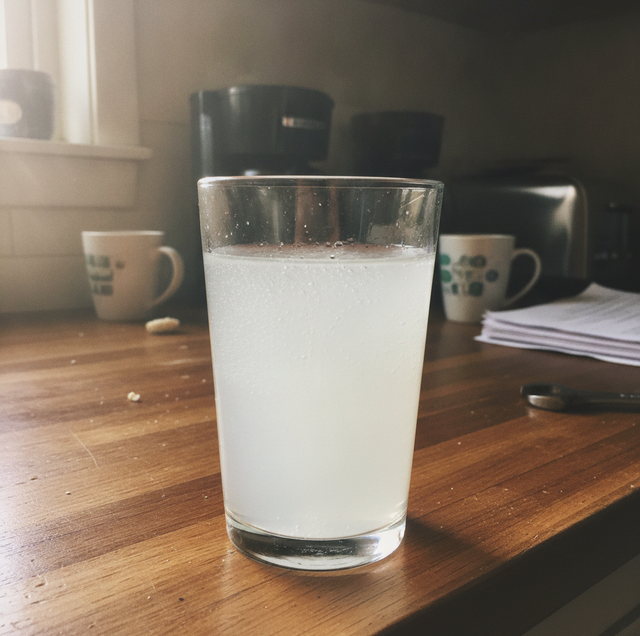
Before anyone opens up the system, fill a clear glass straight from a cold tap and set it on the counter. This one test separates the two families of problems, and it costs you nothing but a minute.
If the cloudiness clears from the bottom up, with a rising line of clear water and the haze vanishing as it goes, you are looking at air, not dirt. Millions of tiny bubbles are working their way to the surface. That milky look means air has gotten into your water, and the cause is almost always at the pressure tank, not down in the well.
If instead the water stays hazy and then drops a layer of grit, grains, or rust-colored silt to the bottom of the glass, that is genuine sediment. Now the question becomes what kind, and where it is coming from. The color, feel, and timing tell the rest of the story.
Trapped Air and a Waterlogged Pressure Tank
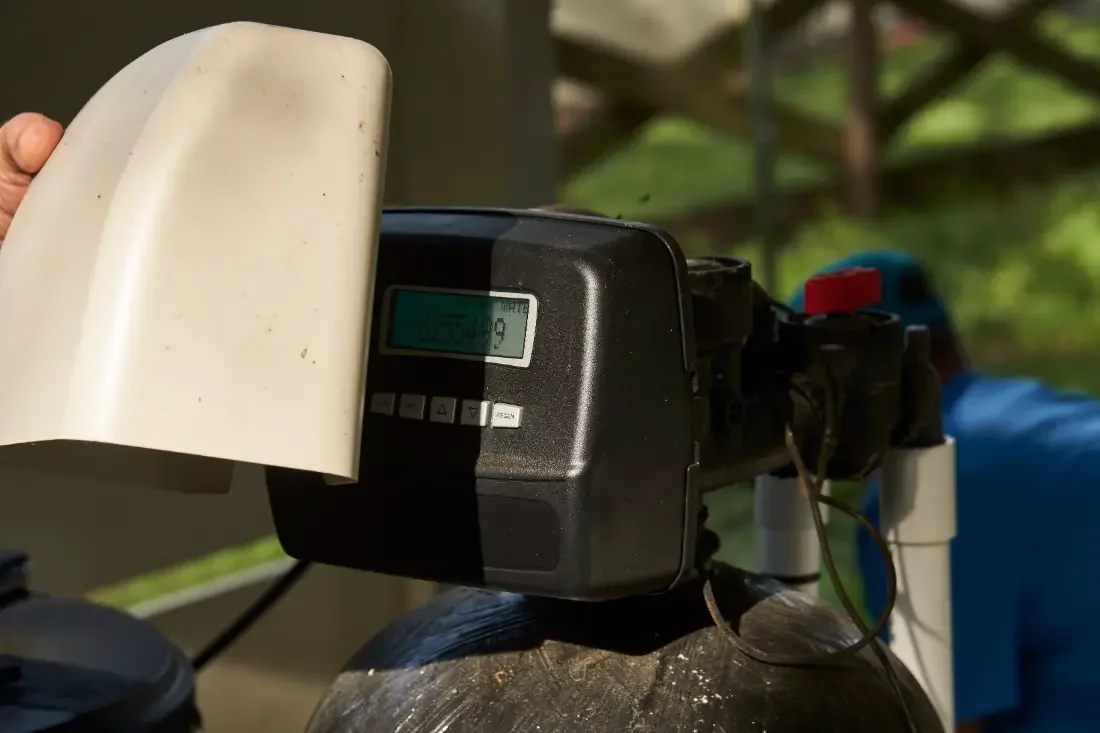
Milky white water that clears bottom-up is trapped air, and the usual source is the pressure tank. A properly working tank keeps a cushion of air separated from the water by a rubber bladder or diaphragm. When that bladder fails, or when an older air-over-water tank loses its air charge, the tank becomes waterlogged. The pump then short-cycles, snapping on and off rapidly, and that violent cycling whips air into the water lines.
You will often notice the cloudiness is worse right when the pump kicks on, sputtering at the faucet, then eases. That sputter, plus the pump clicking on and off far more often than it should, is the fingerprint of a tank problem. It is not dangerous to drink, but the short-cycling that causes it is hard on the pump and the pressure switch, so it is worth correcting rather than living with. The fix ranges from recharging the air in a tank that has simply lost its charge to replacing a tank whose bladder has ruptured.
Sand and Silt from the Well Itself
When the glass drops gritty sand or fine tan silt, the water is pulling solids up from the ground. Many wells sit on sandy aquifers, so fine sand is one of the more common things we see fouling filters and screens. A few causes produce it.
The pump may be set too low in the well, sitting down in the sediment zone near the bottom where sand and fines collect. A pump drawing from that layer will pump grit along with the water. Techs generally set a pump some feet up off the very bottom of the well precisely to stay out of that zone, and a pump that has slipped or was set too deep can start pulling sand.
The well screen itself may be failing. The screen is the slotted or perforated section that lets water in while holding back the formation sand. When it corrodes, cracks, or tears, the barrier is gone and sand comes straight through. A screen that has been in the ground for a long time can simply wear out.
Overpumping is the third cause. If the pump moves more water than the well can comfortably give, the water level drops hard during use, a condition called drawdown, and the fast flow near the screen tears loose fine particles that would otherwise stay put. This shows up as water that runs clear at first, then turns cloudy the longer a heavy fixture or irrigation zone runs. Irrigation-heavy properties lean on their pumps hard enough to bring this on.
Iron, Manganese, and the Rust-Colored Haze
Not all cloudiness is a solid you started with. Some of it forms in front of you. Groundwater often carries dissolved iron and manganese that are invisible while the water is still underground and starved of oxygen. The moment that water hits air at the faucet or sits in a toilet tank, the metals oxidize and drop out as tiny particles. Iron turns the water a yellow, orange, or reddish cloud and leaves rusty stains. Manganese runs toward brown or black and stains fixtures dark.
The tell here is timing. This water frequently pours out clear and then clouds or colors up as it sits for a few minutes, the opposite of the pump-driven grit that is cloudy the instant it leaves the tap. If your cloudiness develops in the glass rather than settling out of it, dissolved metals are the likely culprit, and the answer is oxidizing filtration rather than anything to do with the pump.
Tannins, Bacteria, and a Few Other Suspects
A brownish, tea-colored tint that does not settle out and is not rusty is often tannins, natural organic compounds leached from decaying vegetation in the ground. Tannins tint the water but do not make it truly turbid or gritty, so they read as color more than cloud, and they call for a different treatment than sediment or iron.
Iron bacteria are another possibility, and they leave a signature: a slimy, rust-colored or reddish film in the toilet tank and a faint sheen on standing water. These bacteria feed on iron and can cloud the water while clogging screens and pipes with their buildup. Well chlorination is the usual reset for them.
Finally, think back on the last week or two. A well that suddenly turns cloudy right after nearby construction, a new well going in next door, heavy rain, or recent work on your own well is often just disturbed. Vibration and shifting groundwater stir up fines that were sitting quietly, and the water usually clears on its own once the well settles and you have run it for a while.
Think of the well and pump like a swimming pool with a stirred-up bottom. Leave it be, and the fine stuff drifts back down; run the filter, and it clears faster, but if grit keeps coming, something is actively kicking it up, and that is the part worth chasing.
When the Fix Is a Filter, and When It Is the Well
A whole-house sediment filter, rated somewhere in the range of 5 to 50 microns depending on how fine you need to go, does real work catching sand and silt before it reaches your fixtures and appliances. But a filter is a catch, not a cure. If the pump is pulling sand because it is set wrong or the screen has failed, a filter will load up and clog fast, and you will be changing cartridges constantly while the real problem keeps working on your pump and plumbing. The filter treats the symptom; the well work treats the cause. Sizing the filter and finding the source are two different jobs, and the second one is what actually stops the sand.
Frequently Asked Questions
Cloudiness by itself is an appearance issue, not a health verdict, and trapped air in particular is harmless. But cloudy water can also signal that surface water or contaminants are reaching your well, so the appearance is a reason to test rather than to assume. Private wells are not tested by a utility, so the usual advice is a coliform bacteria and nitrate test at least once a year, plus any time the water changes look, taste, or smell suddenly. That lab test, not the glass on your counter, is what tells you if the water is safe.
It can, and the water heater is usually the first to show it. Sand and silt settle to the bottom of the tank, where they insulate the burner or element and pile up as a hard layer that reduces capacity and can make the tank rumble or pop as it heats. Grit also chews up faucet cartridges, wears toilet fill valves, scores pump seals, and lodges in the tiny screens on washing-machine inlet valves and dishwasher solenoids. Catching sediment upstream with a filter and fixing why it is there protects everything downstream of it.
Where it shows up narrows the cause. Cloudiness at only the hot taps often means sediment has settled in the water heater and gets stirred up when the burner or element fires, or that dissolved air comes out of solution as the water warms, which makes it a heater issue rather than a well one. If it is only one fixture while the rest of the house runs clear, suspect the faucet's aerator screen, which traps grit and can cloud or weaken the stream at just that tap; unscrewing and rinsing it often clears it. Cloudiness at every cold tap in the house is the version that points back to the well or the pressure tank feeding the whole system, which is where a diagnosis should start.
Match the rating to the particle you are actually catching, and step down in stages rather than jumping straight to the finest cartridge. A coarser filter around 20 to 50 microns handles visible sand and grit and lasts a reasonable time before clogging. Finer cartridges down toward 5 microns catch silt and cloudiness, but plug up faster and can restrict flow if the water is dirty. On heavily loaded water, two stages, a coarse pre-filter ahead of a finer one, keep the fine cartridge from blinding over in days. If you are changing cartridges constantly at any rating, that is a sign the source needs fixing, not a finer filter.
Some cloudiness after a new well is drilled or after any work that goes down the hole is normal, because drilling and pump-pulling stir up fines and can leave drilling residue behind. Running the well steadily usually clears it within a day or so of use as the disturbed material flushes out and the formation settles around the screen. If it is still cloudy or gritty after several days of normal use, or it clears and then comes back, that is worth a call, since it can mean the screen was not developed properly or the pump is set in a bad spot.
Often, yes, and the overlap usually points to the pump or the well rather than two separate faults. A screen that is fouling with sand or iron-bacteria buildup restricts how much water gets in, which drops your pressure and lets fines through at the same time. A failing pump can both lose output and pull grit. And a badly waterlogged tank produces sputtering pressure alongside the air-clouded water. When cloudiness and a pressure change arrive together, treat it as one problem in the pump-and-well system, not a coincidence, and have it looked at before the pump takes further wear.
Have your cloudy or sandy well water diagnosed at the source — stop sand before it wears out your pump and appliances. Pump Repair Services serves Orlando, Winter Park, and Apopka. Call (407) 625-5499.