03Guaranteed 2-hour emergency arrival, no after-hours upcharge
04One all-in quote after an on-site diagnosis
055.0 stars, 172 Google reviews
06Licensed, insured, and backed by a 5-year workmanship warranty
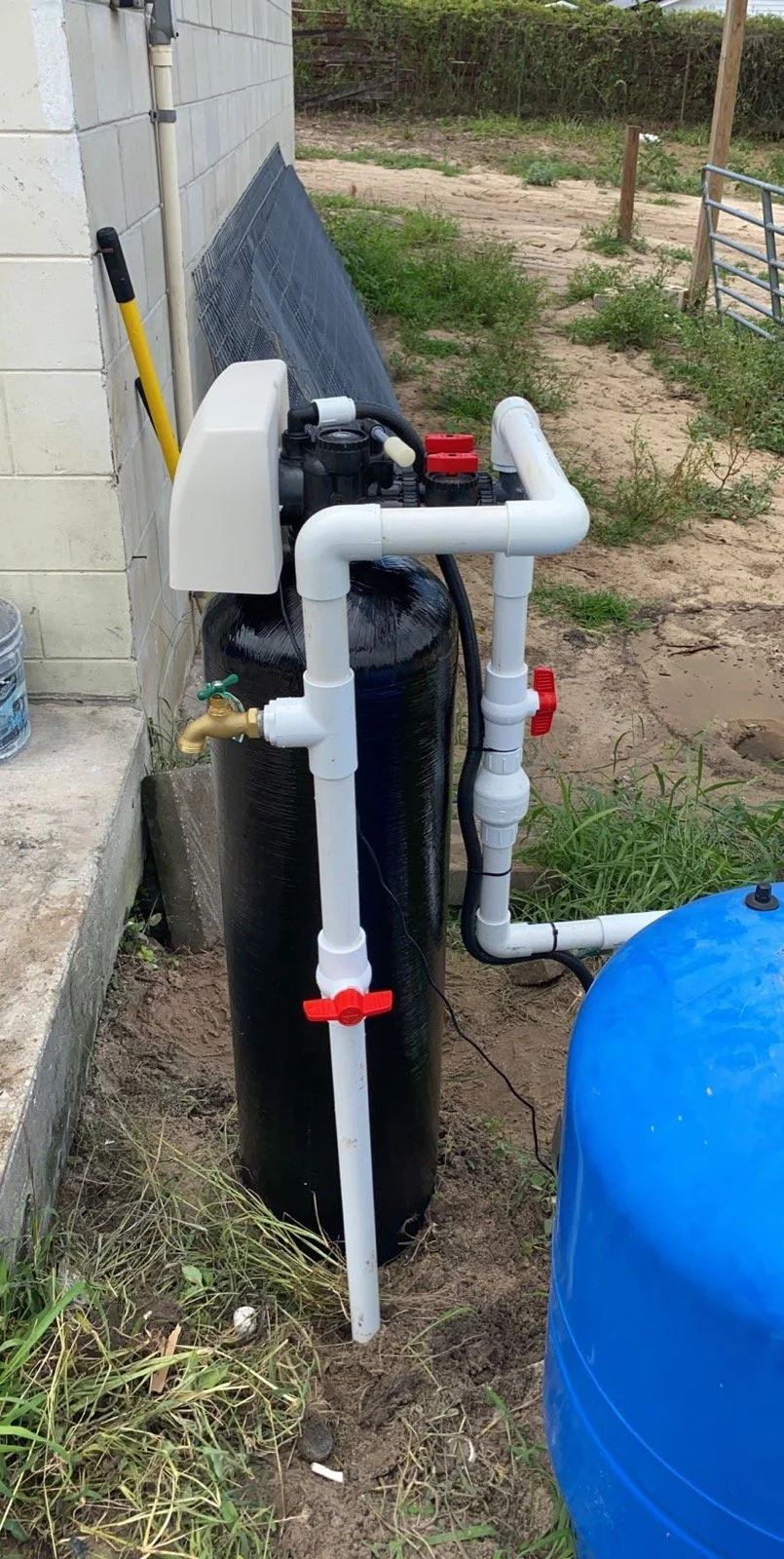
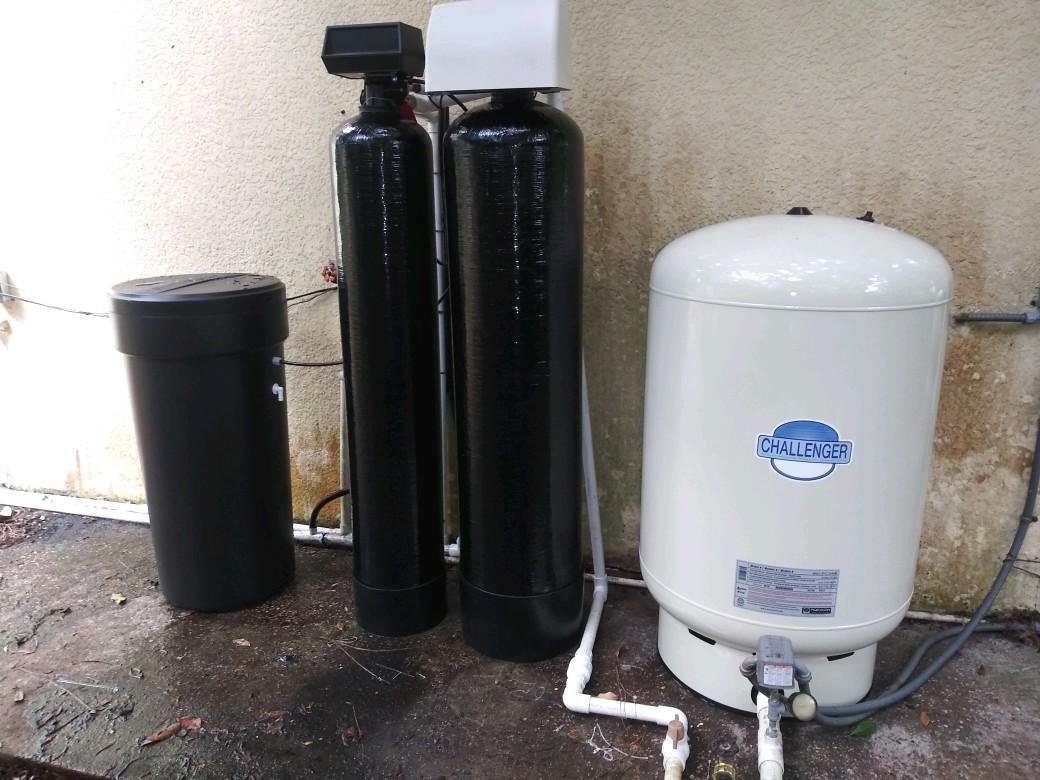
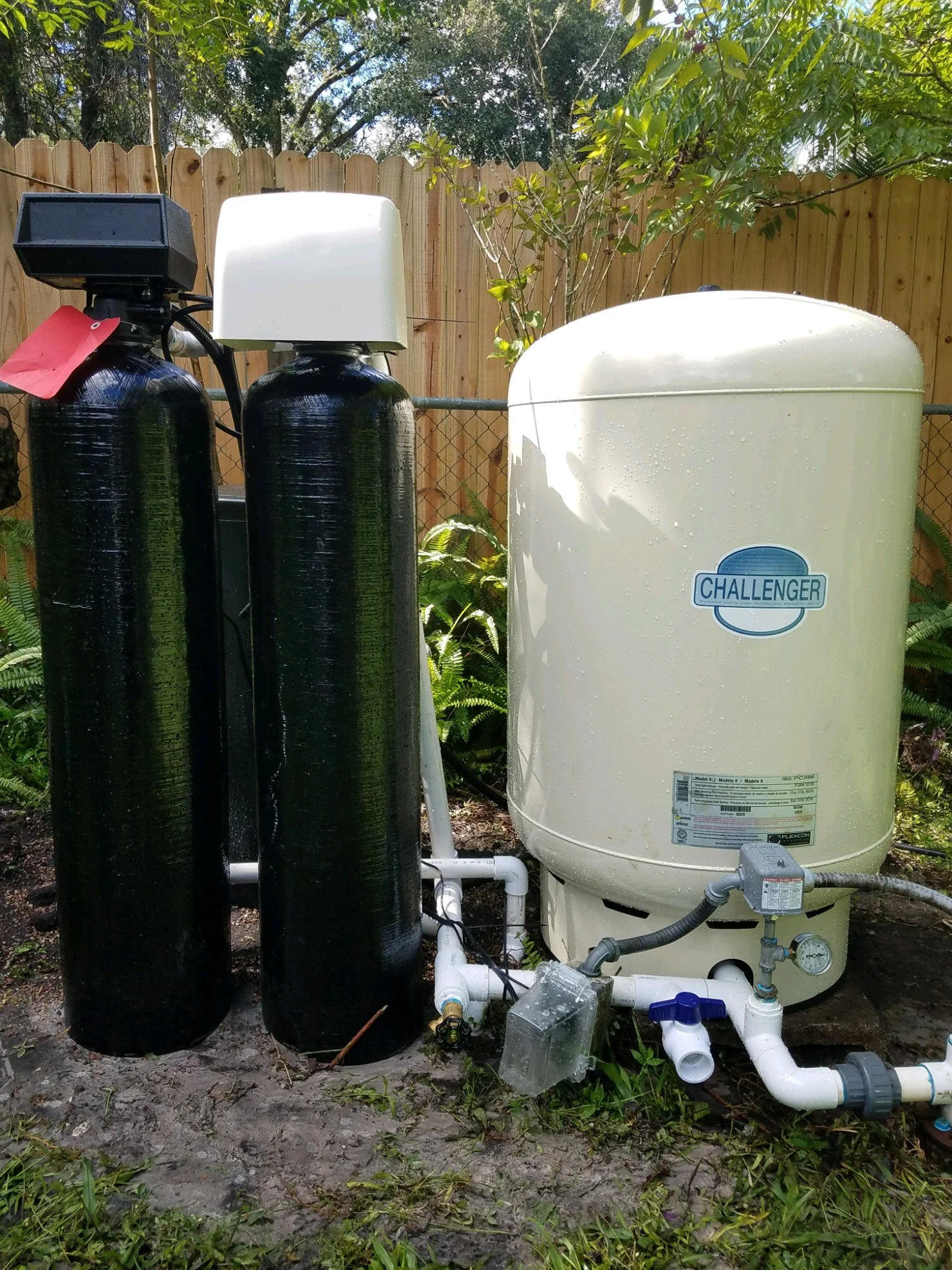
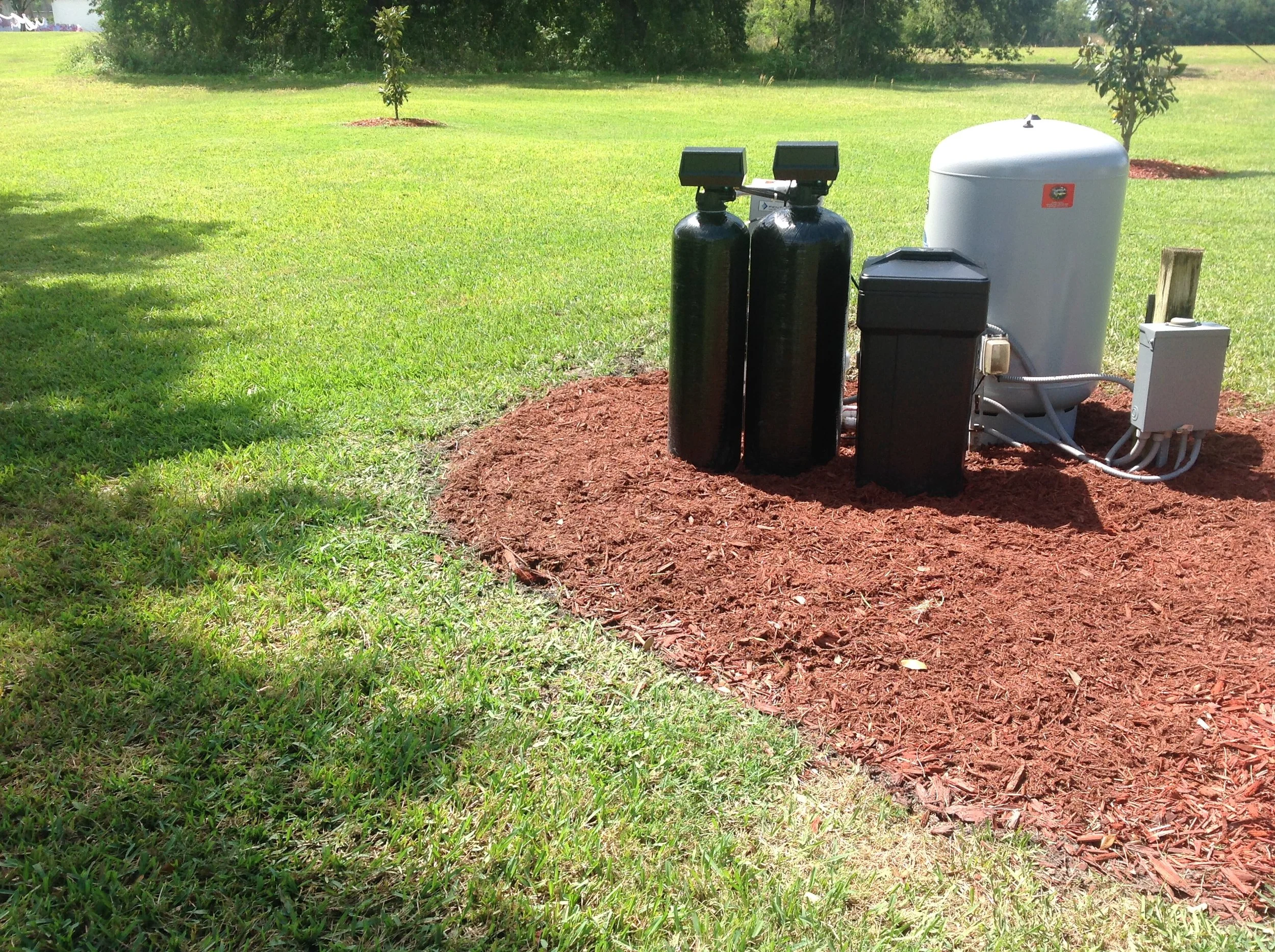
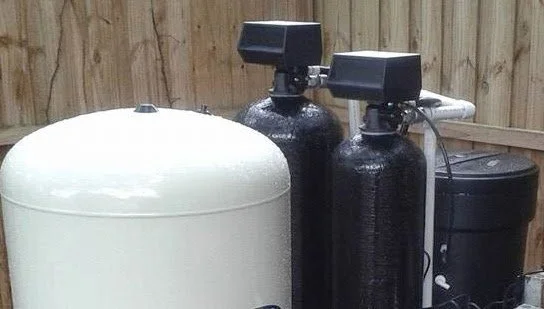
If your well water stains everything orange or greets you with a rotten-egg smell, you are dealing with iron and hydrogen sulfide, the two most common complaints on Central Florida wells. Both come straight out of the Floridan Aquifer, and both are treatable without dosing your home with harsh chemicals. Our approach is aeration-based: we use air and carbon to pull the iron and sulfur out of the water, so what comes out of your taps is clear and odor-free.
We test your water on site, size the system to your iron and sulfide levels, and quote the whole job after that diagnosis. We are the same shop that services your pump, so we know this water inside out.
Three problems that come out of an iron-and-sulfur well
Rust, smell, and the bacteria behind them
Iron and sulfur wells cause three related problems, and treating the water at the whole house solves all three at once instead of chasing them fixture by fixture.
01
Rust and orange staining
Dissolved iron turns to rust the moment it meets air, which is why it stains sinks, tubs, toilets, and laundry orange and brown. It also builds up inside fixtures and appliances. Aeration pulls the iron out before it can stain anything downstream of the system.
02
The rotten-egg smell
The struck-match, rotten-egg odor is hydrogen sulfide gas dissolved in the water. It is unpleasant in the shower and at the tap, and it can tarnish silverware and fixtures. Aeration and carbon strip the gas out of the water so the smell simply goes away.
03
Iron bacteria and slime
Some wells grow iron bacteria, which leave a reddish slime in toilet tanks and can clog fixtures and even the pump over time. It is not a health emergency, but it fouls the system and needs treating at the source rather than wiped away over and over.
Signs you have an iron or sulfur problem
Call us if you are seeing:
Orange or brown staining on sinks, tubs, toilets, or laundry
A rotten-egg or sulfur smell, especially from the hot water
Reddish slime in the toilet tank or on fixtures
A metallic taste to the water
Staining that comes back no matter how often you clean
Aeration & carbon
How an iron and sulfide job goes
Tested, treated with air, and verified
01
We find out what your water carries
Call (407) 809-8805 and we respond immediately. Iron and sulfide come in different amounts from well to well, so we look at your actual levels before sizing anything.
02
Aeration-based system, sized to your water
We size an aeration and carbon system to your iron and sulfide levels, so it removes what your water carries without being oversized or overwhelmed.
03
One all-in quote
You get the full price up front, with no add-ons, covering the system and the complete install.
04
Complete installation
We install the system at the point your water enters the house, so every fixture gets clear, odor-free water, not just one tap.
05
Verify the water is clear
We confirm the staining and the smell are gone at the fixtures and show you the light upkeep the system needs.
What’s included in iron and sulfide treatment
How we pull iron and sulfur out of your water
Component
What it does
Notes
Aeration
Releases iron and sulfide from the water
Air instead of harsh chemicals
Iron/sulfur media
Captures the iron the air releases
Sized to your iron level
Carbon
Strips the rotten-egg odor
Leaves no chlorine taste
KDF media
Aids iron and sulfur reduction
Part of our aeration-based approach
Sediment stage
Removes grit ahead of treatment
Protects the system
Whole-house tie-in
Treats every fixture
Not a single under-sink filter
We treat sulfur with aeration and carbon rather than leaning on chlorine, which is the natural approach most Central Florida homeowners want.
How pricing works
Quoted after we measure your iron and sulfide
There is no flat price for iron and sulfur treatment, because the system is sized to how much your water carries. We test first, then give you one all-in price for the equipment and the complete install, with no add-ons. If hardness is part of your picture too, we will lay out the whole plan so a softener is not asked to fix staining and smell it was never built to handle. See our water treatment page →
A quote is a quote
Reviews
What Central Florida customers say
Real Google reviews from across our service area, updating in the live feed below.
Live Google reviews widget
Live Google reviews widget embeds here (Trustindex / Elfsight / Featurable)
Dissolved hydrogen sulfide gas. It is common on Central Florida wells and, in the usual amounts, more of a nuisance than a hazard. We remove it with aeration and carbon.
02Why does my water stain everything orange?
Iron. It turns to rust the moment it hits air, which is what stains your fixtures and laundry. Aeration pulls it out before it reaches them.
03Do you use chlorine to get rid of the smell?
Our approach is aeration and carbon, not chlorine dosing. It removes the sulfur smell without trading it for a chlorine taste, which is what most homeowners here prefer.
04What is the reddish slime in my toilet tank?
Usually iron bacteria. It is not a health emergency, but it fouls fixtures and can clog the system, so it is worth treating at the source rather than scrubbing endlessly.
05Will a water softener remove iron and the smell?
Not really. A softener handles hardness. Iron staining and sulfur odor need aeration-based treatment, and asking a softener to do that job is why so many of them clog and disappoint. The right sequence treats the iron and sulfur first, then softens, so each stage does the job it was built for.
06Is the rotten-egg smell dangerous?
In the amounts most Central Florida wells carry, it is a nuisance rather than a danger. If yours is unusually strong, we will look at why as part of the visit.
07Why is the smell worse from my hot water?
Heat can drive the sulfide gas out of solution faster, and reactions in the water heater can make it worse. Treating the water where it enters the house addresses it before it ever reaches the heater.
08Will treatment stop the staining for good?
Yes, as long as the system is sized right and maintained. Removing the iron before it oxidizes is what keeps the stains from coming back.
09How much maintenance does the system need?
Less than the constant cartridge-swapping of single filters. We will explain the real upkeep for your system when we install it.
10Why is the smell stronger in some parts of the house?
The rotten-egg gas concentrates where water sits, so the hot water and the fixtures you use least often carry the strongest odor. Treating the water at the point it enters the house clears it everywhere at once, instead of chasing it tap by tap.
11Can you treat iron and hardness at the same time?
Yes. Many Central Florida wells have both, and a properly staged whole-house system handles the iron and sulfur first, then the hardness. Order matters here: putting a softener ahead of iron removal is how softeners get fouled, so we stage it correctly. See our water treatment page for the full picture.
12How soon will the staining and smell go away?
As soon as the system is treating the water, which is right after we install and verify it. The fixtures you already have may need cleaning to remove old stains, but nothing new forms once the iron and sulfur are removed at the point of entry.
13Does iron in the water hurt my pump or plumbing?
It can. Iron and iron bacteria build up inside pipes, fixtures, and even the well and pump over time, restricting flow and shortening equipment life. Treating it protects the whole system, not just the look and smell of the water.
Book your on-site diagnosis for iron & sulfide removal
Call (407) 809-8805 for an immediate response, or send the form and we will get right back to you. For no water, calling is fastest and guarantees a 2-hour arrival.