Repair or Replace: Making the Call on a Failing Well Pump
A well pump rarely dies in one clean moment. It sputters through a string of small failures instead: a burnt-out capacitor last spring, a stuck pressure switch a few months later, and now a motor that hums but won't start. Somewhere in that sequence, every well owner reaches the same fork in the road: keep patching the system that's there, or replace it and start the clock over. The right choice isn't a guess. It comes down to four factors that, weighed together, usually point pretty clearly in one direction: how old the pump is, how often it's been repaired, which component actually failed, and whether the rest of the system around it is aging at the same rate.
How Pump Age Changes the Math
Submersible well pumps typically run eight to fifteen years before wearing out, depending on water quality, how hard the pump works, and how well it was sized for the well in the first place. Jet pumps and above-ground centrifugal pumps often fall within a similar range, sometimes a bit longer, since they're easier to inspect and service without pulling anything out of the ground.
Age by itself isn't a verdict. A four-year-old pump that needs a new capacitor is having a normal, minor problem. A twelve-year-old pump with a failed motor is running past the point where most units of its type are still reliable, and a repair there amounts to patching a system that's already well into its working life.
What a Pattern of Repairs Is Telling You
One repair call rarely means much on its own. A pattern does. If a pump went five years without a service call and now needs a new pressure switch, that's an isolated part reaching the end of its life, not a system-wide failure. If the same pump has needed a technician twice in the same year, first for a tripped breaker and now for a motor that won't prime, that's a different signal: components across the pump are wearing out together rather than one part simply failing in isolation.
Keep a running note of the date and part for every repair. When the gaps between visits start shrinking rather than staying steady, that's usually the clearest sign a pump is heading toward a bigger failure rather than settling back down. A single sheet with three columns- date, part replaced, and technician's notes- is enough to spot that pattern without relying on memory, which tends to smooth over how close together repairs actually happened.
Why the Specific Part That Failed Matters
Not every repair carries the same weight. A blown capacitor, a corroded pressure switch, or a tripped overload relay is a common, inexpensive-to-fix component that can fail on pumps of almost any age, and replacing it is a normal part of ownership. A failed motor winding, a worn impeller, or a cracked motor shaft are a different story. Those are core components, and once one of them goes on a pump that's already past ten years old, the honest math usually favors replacement: pulling a submersible pump to swap the motor takes almost as much labor as pulling it for a full pump swap, so paying for that labor twice, once now and again in a year or two when another core part fails, rarely makes sense.
How Well Depth and Pump Sizing Factor In
A pump that's been struggling isn't always failing on its own. It may have been undersized for the well from the start, or the well's static water level may have dropped since the original pump was installed, forcing it to lift water from farther down than it was built for. A pump rated for a shallower lift working overtime in a deeper well runs hotter, cycles more, and wears out faster than the same pump would in the well it was actually sized for.
If a technician traces repeated failures back to sizing rather than to a single bad part, that's a strong argument for replacing the pump with one matched to the well's real depth and flow demand, rather than another repair on equipment that was never right for the job.
Checking the Rest of the System
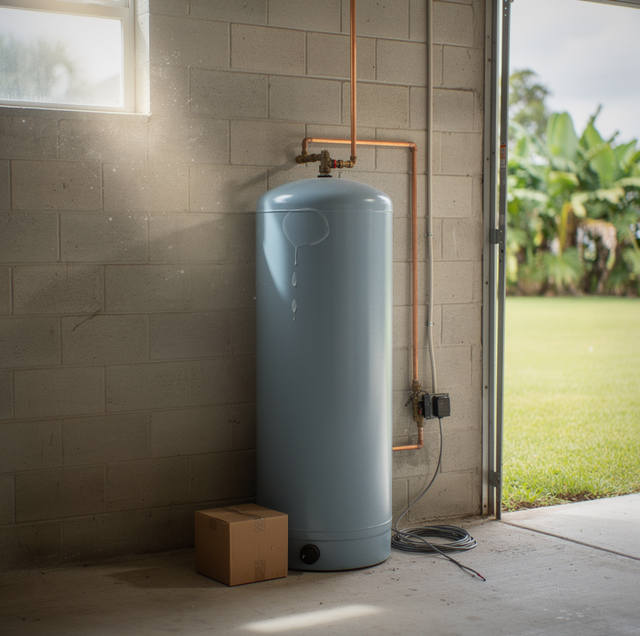
A pump doesn't operate alone. The pressure tank, the drop pipe, the wiring, and the pressure switch all age together, even though they don't all fail at the same rate. A pump replacement paired with a waterlogged pressure tank or brittle drop pipe insulation will show the same symptoms again within a year or two, just from a different part.
It's also worth having a technician check the check valve near the pump discharge and, on deeper wells, the torque arrestor that keeps the pump from twisting against the drop pipe during startup. A worn check valve lets water fall back down the well between cycles, which can look identical to a weak pump even when the pump itself is perfectly fine, and replacing a pump without noticing that valve leaves the original short-cycling symptom in place.
Before deciding between repair and replacement, it's worth having a technician look at the tank's air charge, the condition of the wire splices at the wellhead, and the pipe itself, not just the pump. Sometimes what looks like a pump on its way out is really a tank that's lost its air cushion, and the pump has been working overtime to compensate.
How a Technician Narrows Down Which Factor Applies
A useful diagnostic visit doesn't stop at confirming the pump is dead. A technician pulling a failed submersible pump typically inspects the motor housing for heat discoloration, checks the impeller vanes for wear or pitting, and tests the wire insulation at the splice kit where the drop cable meets the pump lead, since a compromised splice can mimic motor failure symptoms without the motor itself being the actual problem. That level of inspection separates a guess from an informed recommendation: a motor that tests fine electrically but shows visible wear on the impeller points toward a rebuild rather than a full swap, while scorched winding insulation settles the question toward replacement immediately.
Repair vs Replacement at a Glance
| Factor | Favors Repair | Favors Replacement |
|---|---|---|
| Pump age | Under 8 years | Past 10-12 years |
| Repair pattern | One isolated call in several years | Two or more calls in the same year, gaps shrinking |
| Failed part | Capacitor, pressure switch, relay, wiring | Motor winding, impeller, shaft, bearings |
| Sizing | Correctly matched to well depth and flow | Undersized or outgrown by a lower water table |
| System condition | Tank, wiring, and pipe all sound | Tank waterlogged, wiring brittle, pipe degraded |
When Repair Is Still the Right Call
Plenty of situations still favor a repair over a swap. A pump under five to six years old with an isolated electrical failure, a bad capacitor, a tripped breaker, or a corroded switch contact is a normal repair, not a warning sign. A pump running on a well with stable water quality and a steady water table tends to last longer than one working through sand- or mineral-heavy water, so age alone shouldn't override a technician's read of the pump's actual condition. And a pump still under a manufacturer or installation warranty should almost always be repaired first, since part of the labor and parts cost is already covered.
Making the Call With a Technician
None of these four factors- age, repair pattern, which part failed, and the condition of the system around the pump- settles the question alone. A four-year-old pump with a failed motor is still worth a serious look at replacement, since the motor is a core part regardless of the pump's age. A twelve-year-old pump with nothing wrong but a corroded switch contact might still have a few good years left in it.
The clearest answer comes from lining up all four factors and seeing whether they're pointing the same direction. A technician who inspects the pump, checks the wellhead wiring, and tests the pressure tank before recommending a repair or a full swap gives a more useful read than guessing from the symptoms alone, and asking for a written breakdown of what tested sound versus what actually failed keeps the decision grounded in the specific pump rather than a general rule of thumb.
Frequently Asked Questions
Most submersible pumps run reliably for eight to fifteen years, though pumps working in sandy or mineral-heavy water tend to wear out earlier since abrasive particles grind against the impeller and bearings with every cycle. A pump serviced on a regular schedule, with clean screens and a properly charged pressure tank, typically lands at the higher end of that range.
Sometimes, but it depends on the pump's design. On some models, the motor can be swapped separately from the rest of the pump assembly. On others, the motor and pump end are sealed together as one unit, so a burned motor means replacing the whole assembly regardless of how the rest of the pump is holding up.
Yes. Sand and grit act like sandpaper on the impeller vanes and shaft seals, while mineral-heavy water can leave scale deposits inside the pump housing that restrict flow and force the motor to work harder. Wells with high sediment or mineral content often require pump replacement several years earlier than wells with cleaner water.
Jet pumps sit above ground, so a technician can often diagnose and repair them without pulling anything out of the well, which keeps repair time lower. A lot of jet pump trouble actually traces back to the venturi and ejector assembly, a set of nozzles that create suction to draw water up, and those can often be cleaned or swapped without touching the motor at all. Submersible pumps sit down in the well itself, so any repair to the pump or motor means pulling the entire assembly up through the casing with a hoist or pulling rig, equipment most property owners don't have on hand, which adds labor regardless of how minor the actual part failure turns out to be.
Increased cycling is one of the more reliable early warning signs of a pump or pressure tank nearing the end of its service life. A pump that used to run for a minute or two per cycle and now kicks on for a few seconds at a time is showing a sign that either the pressure tank has lost its air charge or the pump itself is losing efficiency, and either one is worth a technician's look before it becomes a full failure.
It can make sense in specific cases: a pump already past twelve years old with a recent pattern of repairs, or a pump that's clearly undersized for a well whose water table has dropped. Waiting for a complete failure means going without water until a technician can respond, whereas a planned replacement can happen on your schedule rather than during an emergency.
A well pump rarely announces exactly when it's done. It sends signals instead: an aging capacitor here, a slightly longer response time there, and it's easy to keep patching those signals one at a time without stepping back to see the pattern. Weighing age, repair history, the specific part that failed, and the condition of the tank and wiring around the pump turns a stressful in-the-moment decision into one you can make with a clear head, on your own timeline rather than the pump's.
Not sure if your well pump is worth another repair? — Get a straight repair-or-replace assessment from a technician who checks the whole system, not just the part that failed. Pump Repair Services serves Orlando, Winter Park, and Apopka. Call (407) 625-5499.