Well Pump Tripping the Breaker? What Actually Fails First
You flip the breaker back and the pump runs, sometimes for a few seconds, sometimes for a few minutes, and then the whole panel clicks off again. Maybe it happens the moment the pump tries to start. Maybe it takes a few minutes of running first. Either way, you have now reset that breaker three or four times, and part of you wonders if it will just keep doing this forever, or if the next reset is the one that starts a fire in the panel.
A breaker that trips once might be a fluke. A breaker that trips repeatedly on the same circuit is doing exactly what it is designed to do: it is measuring current, and something on that circuit is pulling more of it than the wire and the breaker was built to carry. The pump itself, the components that start it, or the wiring feeding it are the only places current can come from, and each leaves a different pattern of symptoms.
How the Breaker Is Actually Protecting the Circuit
Think of the breaker as a current gauge with a trip switch built in. Every circuit is sized for a maximum safe current, and the breaker is set to open before that limit is exceeded long enough to overheat the wire. A well pump circuit trips for one of three reasons: the motor or its cable is drawing far more current than normal because something inside has shorted, the pump is asking for a hard surge of starting current that the circuit cannot supply cleanly, or the breaker and wiring themselves have aged past their rated capacity and are opening below their original threshold.
Timing is the first clue worth noticing. A breaker that trips the instant the pump tries to start almost always points at a high inrush current problem, something in the starting circuit rather than a slow-building fault. A breaker that holds for a minute or several minutes of normal running before tripping usually means heat is building somewhere on the circuit, which points more toward a developing short or an undersized, aging breaker than a startup issue.
Matching the Pattern to the Cause
| What you notice | Likely cause | What to do |
|---|---|---|
| Trips the instant the pump tries to start | Failing start capacitor or a locked-rotor motor | Have the control box and capacitor tested before the motor is condemned |
| Trips after the pump has been running a while | Developing short in the motor windings or submersible cable | Have insulation resistance tested on the cable and motor |
| Trips randomly, no clear pattern | Loose or corroded wire connection heating up under load | Inspect and re-terminate the wellhead and control box connections |
| Only trips during or right after storms | Surge damage to the control box or motor windings | Have the control box and motor checked for storm-related damage |
| Breaker is old, and the panel is original to the house | Breaker itself has weakened and now trips below its rated load | Have an electrician test and, if needed, replace the breaker |
When the Motor Windings Have Shorted
A submersible motor sits down in the well, sealed against the water it pumps, and that seal is what eventually fails. Years of thermal cycling, mineral-laden water, and the ordinary vibration of starting and stopping can let moisture work past the shaft seal or into a nick in the cable jacket. Once water reaches the copper windings, the insulation between them breaks down, and current starts finding a path it should not: winding to winding, or winding to the grounded motor housing. That shows up on the breaker as a sudden jump in current draw, and depending on how severe the short is, the trip may happen at start or partway through a run.
A technician confirms this with an insulation resistance test, sometimes called a megger test, run at the wellhead disconnect with the pump isolated from the rest of the circuit. A healthy motor and cable read a high resistance to ground; a motor with water intrusion reads low, and the reading tends to get worse the longer the fault has been developing. This test also helps distinguish a shorted cable from a shorted motor, since the fault can sit anywhere between the panel and the pump itself.
The Control Box and Start Capacitor
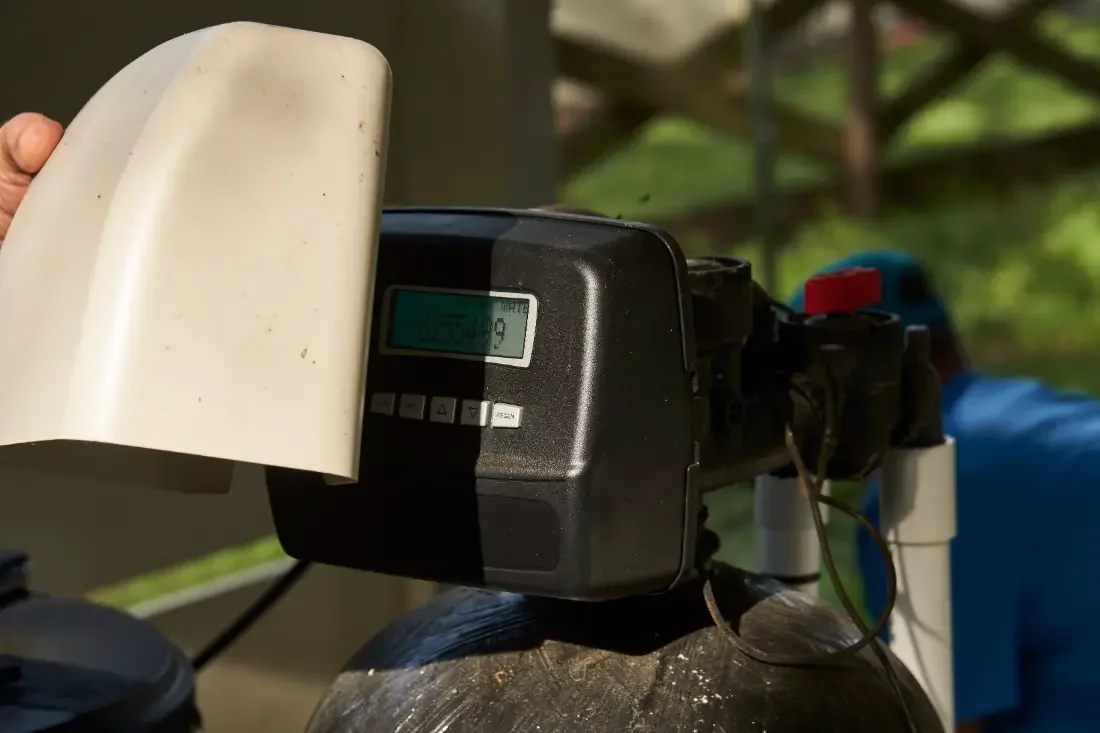
Most single-phase submersible pumps rely on a control box mounted above ground, usually near the pressure tank, that houses a start capacitor, sometimes a run capacitor, and a relay that switches between them as the motor comes up to speed. The start capacitor's job is to give the motor a jolt of extra current for the fraction of a second it takes to get spinning. When that capacitor weakens, or its internal foil starts to fail, one of two things happens: the motor can no longer get past its initial resistance and stalls (which itself draws a heavy locked-rotor current), or the relay fails to disconnect the start winding on time, keeping that inrush current flowing far longer than it should.
Either failure trips the breaker almost the instant power is applied, which is the clearest sign this component, not the motor, is the suspect. Heat is the capacitor's enemy, and one placed in a hot equipment room or direct sun works harder over its lifespan than one kept cool, which is why control boxes mounted in full sun tend to need this part replaced sooner than ones tucked in shade.
Storm Surges and Sudden Power Interruptions
Lightning does not need a direct strike on the well to do damage. A nearby strike can induce a voltage spike on the utility line or the well's own wiring, and that spike travels straight to whatever component offers the least resistance, usually the control box relay or capacitor, sometimes the motor windings themselves. A pump that worked normally before a storm and started tripping the breaker right after is a strong sign of surge damage rather than a coincidental, unrelated failure.
Power interruptions carry a different risk. When utility power blinks off and on rapidly during a storm, a pump that was mid-cycle can be forced to restart under load repeatedly in a short span, and each restart pulls that same heavy inrush current. A breaker or wiring already close to its limit can trip from the cumulative heating of several rapid restarts even without any actual short existing yet, which is one reason surge protection at the well is worth having regardless of the season, since outages are not limited to any single time of year.
Loose Wiring and an Aging Breaker
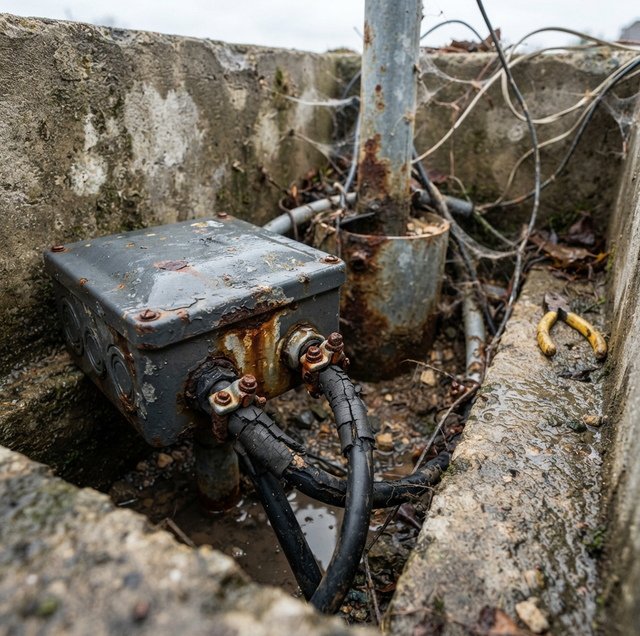
Not every trip traces back to the pump. A connection at the wellhead junction box, the pitless adapter splice, or inside the control box itself can loosen over time from vibration or corrode from humidity, and a loose connection has higher resistance than a tight one. Higher resistance at one point means that point runs hot under normal current, and the heat can be enough to trip a thermal-magnetic breaker even though the pump itself is drawing a perfectly normal amount of current.
The breaker is also a wearing part, not a permanent fixture. Every trip stresses its internal mechanism slightly, and after enough cycles, especially on an older panel, a breaker's trip point can drift lower than its rating, so it opens under a load that used to run without issue. This is worth ruling out before a technician spends time chasing a motor fault that was never there.
What Not to Do While You Figure This Out
Resetting a tripping breaker over and over is not a harmless habit. Each reset on a genuine short sends fault current through the wiring for the instant it takes the breaker to open again, and that repeated stress heats insulation, pits contacts, and, in a worst case, can ignite material near the fault before the breaker manages to trip. If the breaker trips a second time on reset, stop resetting it and get the circuit tested rather than trying a third or fourth time.
What a Tripped Breaker Is Actually Telling You
A well pump breaker tripping once might mean nothing. Tripping on a repeatable pattern means the circuit is protecting itself from a real fault, and where in that pattern the trip happens narrows down whether the problem is the motor down in the well, the capacitor and relay in the control box, the wiring between them, or the breaker itself. Once tested, none of those are guesswork, and catching the fault before it grows is what keeps a capacitor swap from turning into a full motor pull.
Frequently Asked Questions
Most residential submersible pump installations use a dedicated two-pole breaker sized to the motor's full-load amperage with some margin built in, since a shared or undersized breaker will nuisance-trip even on a perfectly healthy pump. Some installations also add ground-fault protection as an extra safety layer on the circuit, particularly where the wellhead or control box sits in a damp equipment space. A technician checking a repeat-trip complaint will confirm the breaker's rating actually matches the motor's nameplate amperage before looking anywhere else, since a mismatched breaker mimics every other cause on this list.
A capacitor can be checked against its rated microfarad value stamped on its case using a multimeter with a capacitance setting, and a reading well below that rating confirms it has weakened. The part that trips people up is that a capacitor holds a stored charge even with the power off, so it needs to be safely discharged first, typically by bridging its terminals with an insulated tool, before it is touched or removed. Given that risk and the fact that a control box also has line-voltage wiring inside it, this is one test most homeowners leave to a technician rather than attempting themselves.
It changes where the suspect components actually sit. A three-wire motor keeps its start and run windings separate and relies on the control box above ground to house the start capacitor and switching relay, which is the setup this article mostly describes. A two-wire motor builds a small starting device directly into the motor itself, down in the well, so there is no separate relay to fail above ground, and a starting fault on a two-wire pump points straight at the motor rather than a box you can open at the surface. Knowing which type is installed tells a technician whether the first thing to open is the control box or the wellhead disconnect.
Indirectly, yes, though the path is not always obvious. Many submersible motors include a built-in thermal overload that shuts the motor down internally if it overheats from running with insufficient water flow past it to cool the windings, and that internal protection is separate from the panel breaker. If a motor's own thermal protection is failing to do its job, sustained dry-running heat can eventually damage the winding insulation enough to create the kind of short that then does trip the breaker. So a low-water condition is rarely the direct cause of a breaker trip, but it can be the reason a motor got damaged enough to cause one later.
A dedicated surge protection device installed at the well's disconnect can absorb a good share of an induced voltage spike before it reaches the control box relay, capacitor, or motor windings, which is the more common storm-related damage path since a direct lightning strike on the well itself is comparatively rare. It will not guarantee protection against every event, and a close, powerful strike can still overwhelm it, but on a property that has already lost a capacitor or relay to storm damage once, adding one is a reasonable way to reduce how often that repair repeats.
The process usually starts by isolating the well circuit at the disconnect and running an insulation resistance test on the submersible cable and motor together, since a low reading there confirms a winding or cable short and a normal reading rules the motor out entirely. From there, the control box gets opened, and the start and run capacitors are tested individually against their rated values, and the relay is checked for proper switching. Wiring connections at the wellhead and control box get inspected for heat discoloration, which flags a loose or corroded connection even before it fails. Testing in that order avoids replacing an expensive motor when the actual fault turns out to be a low-cost capacitor or a loose splice.
Putting the Trips Together
A breaker that keeps tripping on a well pump circuit is reporting a real electrical fault somewhere between the panel and the pump, and the timing of the trip is the first clue to where. An instant trip at start leans toward the capacitor and relay in the control box; a trip after some running time leans toward a developing short in the motor or cable; a pattern with no rhyme or reason often traces back to a loose connection or a breaker that has aged past its rating. None of it needs to be guessed at, and none of it should be worked around by repeatedly flipping the breaker back on.
If your well pump keeps tripping the breaker, have it tested before the fault gets worse - a technician can check the motor, the control box capacitor and relay, and the wiring itself to find exactly where the current is escaping. Pump Repair Services serves Apopka and the surrounding Central Florida area. Call (407) 625-5499.