
Why Won't My Irrigation Pump Prime or Hold Pressure? What to Check
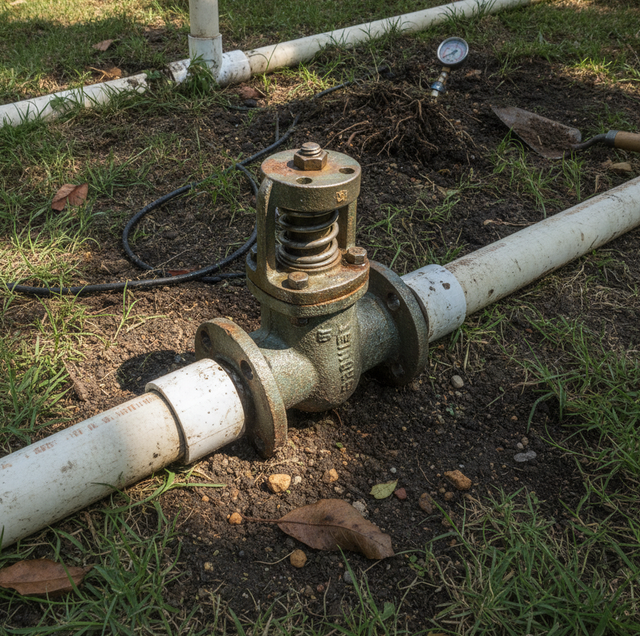
You flip the switch, the motor spins up with that familiar whir, and then nothing. No rush of water, no zones popping up, just a pump running against itself and getting warm. Or maybe it does catch, the gauge climbs for a few seconds, and then the pressure sags back to nothing while the pump keeps hunting for water that never arrives.
Both of those are prime problems, and they trace back to one stubborn fact about how the pump moves water. Once that fact makes sense, the list of likely culprits gets short, and the diagnosis stops feeling like guesswork.
Why the Pump Has to Be Full of Water to Move Water
Most above-ground irrigation and sprinkler pumps are centrifugal. Inside the housing, a spinning impeller flings water outward by centrifugal force, and that throwing action leaves a low-pressure zone at the center, the eye of the impeller. Atmospheric pressure on the water source then pushes more water up the suction pipe to fill that zone. That is the whole trick: the impeller cannot pull water up; it can only leave a vacuum that the weight of the air fills.
Here is the catch. That trick only works on water. Water is nearly incompressible, so when the impeller throws it, it grabs the next slug of water behind it, keeping the column moving. Air is the opposite. It compresses. An impeller spinning in a pocket of air just churns the air around without ever creating the vacuum needed to lift water. The motor is turning, current is flowing, and nothing reaches the sprinklers.
That is what prime means. A primed pump has its housing, the volute, and ideally the suction line already full of water, with no air gap for the impeller to spin uselessly against. Lose that water column, and the pump goes deaf to the source below it. Lifting the water at all depends on suction lift, atmospheric pressure doing the pushing, and at typical elevations, that tops out near 25 vertical feet of practical lift. The higher the pump sits above the water and the more air that sneaks into the line, the harder priming gets.
Two Different Complaints, Two Different Searches
Before you touch a wrench, decide which problem you actually have, because they point in opposite directions.
If the pump will not prime at all, even right after you fill it, air is getting in faster than the pump can push it out, or the impeller and seal are too worn to build suction. Something on the suction side is the prime suspect.
If the pump primes fine when you fill it but loses prime between runs, then the first cycle of the day is a fight, with water draining out of the suction line while the pump sits idle. That is almost always a valve that is supposed to hold the water and isn't. Same dry pump on the surface, but a different mechanism and a different fix. Sort that out first, and you save yourself from chasing the wrong part.
Air Sneaking In on the Suction Side
The suction side operates under a vacuum whenever the motor runs, which changes how leaks behave. On the discharge side, a bad fitting drips water; you can see. On the suction side, the same gap works in reverse: the vacuum draws air in, often with no drip at all. That is why suction leaks are the sneakiest cause of a no-prime condition in a pump. Everything looks dry, and the pump still will not catch.
Run your eye along everything between the water source and the pump inlet. Threaded fittings assembled without enough PTFE tape or thread sealant are a classic entry point, and so is a union that becomes loose from vibration. PVC intake pipe nicked by a mower or cracked by a freeze can weep air through a hairline you can barely see. The gasket under the strainer basket lid on a self-priming pump dries out, shrinks, and stops sealing, so the pump breathes air every time it tries to draw. A suction hose gone stiff and porous with age does the same along its whole length.
Do not overlook the prime plug itself, the fill port on top of the pump body. Its O-ring is a small, cheap part that takes real abuse from heat and pressure cycling, and when it flattens or cracks, the pump pulls air right at the highest point of the housing, exactly where a pocket of air does the most damage to prime. A smear of pump-safe grease and a fresh O-ring often ends a no-prime mystery that had someone convinced the whole pump was shot.
A Foot Valve or Check Valve That Won't Hold the Water
If your pump primes but cannot hold the pressure overnight, check the one-way valve that is meant to trap the water column in place. On a suction line that reaches down into a source, that job belongs to a foot valve at the very bottom of the pipe. On other setups, it is a check valve mounted inline near the pump. Either way, the purpose is identical: let water flow toward the pump, then snap shut when the pump stops so the column cannot siphon back down.
When that valve stops sealing, gravity takes over during the off-cycle. A grain of sand props the flapper open, the rubber seat hardens and no longer mates cleanly, or the disc cracks. Water quietly drains back to the source, and by morning, the pump sits on a column of air. You fill it, it runs, you shut it off, and the whole thing repeats the next day. The tell is timing: a pump that works fine once primed but always loses prime while parked is pointing straight at a leaking foot or check valve. Fine grit in the water, common where sandy ground feeds the intake, wears these valves and their seats faster than most people expect, so it is worth checking in any season, not just after the system has sat unused.
When the Source, the Screen, or the Impeller Is the Problem
Sometimes the valves and fittings are fine, and the water simply is not there to grab. An intake screen or strainer basket packed with sand, algae, leaves, or a snail chokes the flow until the pump is starving, even though the source is full. The pump pulls hard against the blockage, pressure at the impeller drops low enough to boil the water into vapor, and those bubbles collapse violently against the impeller. That is cavitation, and it sounds like the pump is chewing gravel. Left alone, it pits and erodes the impeller vanes.
Water level matters too. Where a pump draws from a shallow source, the level rises with wet-season recharge and falls during dry-season drawdown. If it drops below the foot valve or near the end of the suction pipe, the pump gulps a mix of water and air and cannot hold a clean prime. This is a year-round variable rather than a one-time event, so a setup that primes easily in a wet stretch can turn stubborn as the source draws down, then recover on its own later.
Then there is plain wear. The impeller and the wear ring around it are sized to a tight clearance so the pump can build suction and pressure. As grit erodes the vanes and widens the clearance, the pump loses its bite: it primes slowly, tops out at a lower pressure, and cannot lift as high as it once did. Right alongside it, the mechanical seal, the spring-loaded seal riding on the shaft where it enters the housing, keeps water in and air out at that penetration. A worn seal drips a little water when the pump runs and can draw air while priming. A pump that used to catch in seconds and now takes a long, noisy struggle is often telling you the impeller and seal have aged out.
How to Re-Prime Without Cooking the Pump
Refilling the pump is easy to do and easy to do badly, and the bad version can ruin a healthy pump in minutes. Cut the power first so it cannot start while you work. Back out the prime plug, then pour clean water into the port until the volute and as much of the suction line as you can reach are full, and water brims at the top. Filling the suction line, not just the pump body, is what gives a stubborn setup its best shot at catching. Reseat the plug with a sound O-ring so you are not undoing your work with a fresh air leak.
Open a downstream zone or valve so trapped air has somewhere to escape as the pump pushes it out. Restore power and start it. A healthy pump should grab prime and build steady pressure within roughly thirty to sixty seconds. Watch the gauge. If it has not made real pressure in a minute or two, shut it off. This is the part that costs people pumps: a centrifugal pump relies on the water moving through it to cool and lubricate the mechanical seal, and running dry against a lost prime overheats that seal and can score the shaft in minutes. Do not keep cycling it and hoping. If it will not hold after a proper fill, you have confirmed a real fault upstream, and forcing it only adds a wrecked seal to the repair.
Frequently Asked Questions
Time it. Fill and start the pump, run it, then shut it off and wait. If it loses prime only while parked and needs re-priming each morning, suspect the foot or check valve draining the line back. If it will not hold even while running, or never catches at all after a full fill, the leak is on the suction side pulling air in. A field trick: with the pump primed and running weakly, brush a little water over each suction fitting and joint, and a momentary change in sound or pressure as the water seals a gap points you to the leak.
Yes, though neither runs on air alone. A self-priming pump has a built-in reservoir and a recirculation path that mixes trapped air with the water it already holds and gradually purges that air out the discharge, so it can re-establish prime on its own after a short air interruption. But it still needs its housing kept full to start, and it will still fail if a suction leak feeds air faster than it can expel. A standard centrifugal pump has no such recovery trick and leans entirely on the foot valve and a sealed suction line to stay primed.
It can. A pump that primes and holds but only makes weak pressure usually points to a worn impeller and opened-up wear ring clearance, a partially clogged intake screen throttling flow, or too many zones open at once for the pump's rated output. Air in the line causes pressure surges and drops; a steady but low reading leans toward wear or a restriction. Watching whether the pressure is unstable or just low helps separate a prime fault from a capacity fault.
That sound is usually cavitation, vapor bubbles forming and collapsing at the impeller because the pump cannot get enough water. A clogged strainer, a suction line that is too long or set too high, or a dropped source level are the common triggers. It is not cosmetic: the collapsing bubbles hammer and pit the impeller and bearings, so a pump left to cavitate wears out early. Clearing the intake screen and confirming the water level are the first moves.
Yes, and how fast the damage starts catches people out. A centrifugal pump's mechanical seal is cooled and lubricated by the water passing through it, so with no water moving, the seal faces run dry against each other. A brief dry spell of seconds to about a minute is usually survivable; it is sustained dry running that does the harm, and it escalates in a set order. The seal faces glaze and score first, then the heat works down the shaft and scores it where the seal rides, and finally the bearings and motor cook once the seal has failed and begun to leak. Some pumps carry a dry-run shutoff, a thermal or flow sensor that kills the motor when it senses no water moving. On a pump without one, you are the shutoff, so cut it if it has not caught within a minute or two of a full prime.
Sometimes, and it runs both directions. In a dry stretch, the source can draw down toward the foot valve so the pump gulps air, a cold snap can crack exposed above-ground suction plumbing and open a fresh leak, and steady heat and humidity age the seals and O-rings that hold prime. So a pump that behaves in one season and struggles in another usually has a marginal part, a valve, an O-ring, or a low source, that only shows itself under the right conditions, rather than a true seasonal cause.
When the Pump Won't Pull Water
A pump that will not prime or hold pressure feels like a dead pump, but it rarely is. In most cases, the impeller and motor are fine, and the real problem is a water column that keeps escaping, either as air sucked in through the suction side or as water drained back through a valve that no longer seals. Start by deciding whether you lose prime while running or only while parked, because that one observation splits the whole diagnosis. Fill the pump properly, give it a fair chance to catch, and refuse to let it run dry while you figure it out. When a full, careful prime still will not hold, the fault is a real part that needs replacing, and matching the right valve, seal, or impeller to your pump is where a proper diagnosis pays off.
Have an irrigation or sprinkler pump that won't prime or hold pressure, or one that runs dry and struggles to catch - get it diagnosed before a lost prime turns into a burned-up seal. Pump Repair Services serves Apopka and the surrounding Central Florida area. Call (407) 625-5499.
