What Is Well Chlorination? The Fix for a Bad Bacteria Test
If your well water suddenly smells like rotten eggs, or a lab test came back positive for bacteria, you have probably heard the phrase "shock the well." Well, chlorination is the process behind that phrase, and it is one of the most common fixes for a private well that has gone off. It is also widely misunderstood. Plenty of homeowners run through the routine, drink the water again, and are surprised when the same smell or the same bad test comes back a few weeks later.
The reason is simple once you understand the mechanism. Chlorination cleans out what is living in the well right now. It does nothing about how those organisms got there. Getting that distinction right is the difference between a problem that stays solved and one that keeps coming back.
Quick Answer: Well chlorination, often called shock chlorination, means introducing a strong chlorine solution into the well and the plumbing to kill bacteria, holding it in the system for a period, then flushing it out and retesting the water. You need it after a positive bacteria test, after any work that opens the well, after flooding, or when a new sulfur smell or slimy buildup shows up.
What Well Chlorination Actually Is
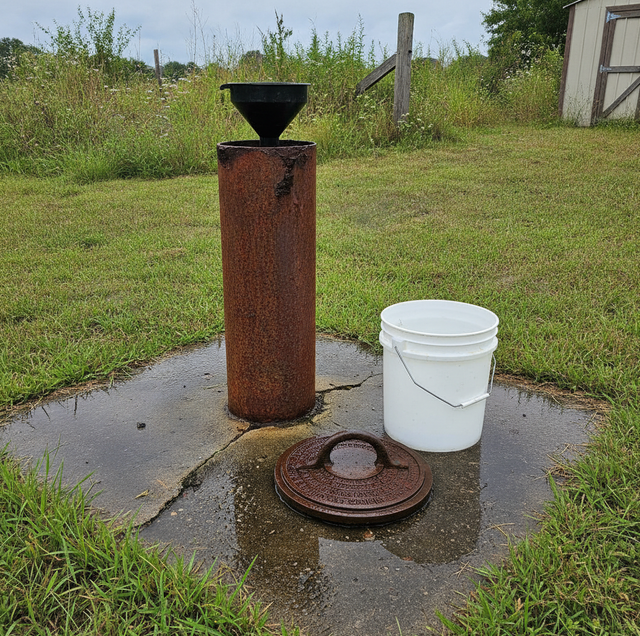
A private well is a closed loop that you rarely see the inside of. Water sits in the casing, gets pulled up by the pump, runs through a pressure tank, and moves out to your fixtures. Bacteria can establish themselves anywhere along that path, on the casing walls, in the pump, inside the tank, and along the pipe runs.
Chlorination introduces a measured chlorine solution into that whole loop. Chlorine is a strong oxidizer, which is a fancy way of saying it chemically tears apart the cell walls and internal structures of the organisms it contacts. Bacteria and the slimy films they build cannot survive sustained contact with it. The keyword is contact. The solution has to actually reach every surface where something is living, which is why it is circulated through the system rather than just poured down the hole and forgotten.
Think of it like disinfecting a garden hose that has gone slimy inside. Rinsing the outside does nothing. You have to get a cleaning solution running through the entire length, let it sit long enough to work, and then flush it completely before you would ever drink from it again. A well is the same idea at a much larger scale, with the pump doing the circulating.
How the Process Works, Start to Finish
Every well is a little different, so this is the shape of the job rather than a recipe to follow at home. A properly done chlorination runs in a clear sequence.
First comes a water test, before anything else happens. That test confirms what you are actually dealing with and gives you a baseline. Skipping it means you are treating blind.
Next, a measured chlorine solution is prepared and introduced into the well. The amount is matched to the depth and volume of water in the casing, because too little does not disinfect and too much is hard to flush out later. Once it is in, the solution is circulated so it reaches the casing walls, the pump, the pressure tank, and every branch of the plumbing, including outdoor spigots and any water-using appliances.
Then the chlorine is held in the system for a period, undisturbed, so it has time to work on everything it is touching. After that, the whole system is flushed. Water is run until the chlorine is completely gone, which can take a while because you are clearing it out of the casing and every line.
Finally, the water is retested for bacteria. That follow-up test is the entire point. Until it comes back clear, the job is not finished, no matter how good the water looks or smells.
When You Actually Need to Chlorinate
Chlorination is a specific tool for specific situations, not routine housekeeping you do for no reason. Here is when it earns its place.
A positive bacteria test is the clearest trigger. If a lab reports coliform bacteria, or worse, E. coli, in your sample, something is getting into your water that should not be. Chlorination is the standard first response.
Any work that opens the system is another. Pulling a pump, installing a new pressure tank, repairing, or drilling a brand-new well all expose the interior to the outside world. Disinfecting afterward is standard practice before the water is put back into use.
Flooding is a big one. If floodwater or a submerged wellhead puts surface water in contact with your well, contamination is a real possibility, and the well should be shocked and retested before anyone drinks from it.
Sensory clues count too. A sudden rotten-egg smell, a slimy reddish or black buildup in your fixtures and tank, or a musty taste and odor can all point to bacteria colonizing the system. These are worth a test, and often a chlorination.
Some owners also chlorinate periodically as maintenance, especially on older wells or in areas with known groundwater issues. That is a reasonable habit, as long as it is not being used to paper over a real, recurring problem.
The High Water-Table Factor
Areas with a high water table see this cut both ways for well owners. In the wet season, heavy rain and the flooding it can cause raise the risk that surface water finds a path into a well, which is exactly the scenario chlorination is meant to answer. A wellhead that gets submerged, or ground that stays saturated for days, gives contaminants more chances to migrate down toward your casing.
The other side of that same coin is that the risk never fully disappears in the dry months either. A shallow water table means the buffer between surface contamination and your water supply is thin year-round, so a cracked casing or a failing seal can let water in during any season, not just after a storm. That is why the fix is rarely just chlorination. It is chlorination plus a hard look at whether your wellhead and casing are actually sealed against the water sitting so close to the surface.
Why Chlorination Is Often Not the Whole Answer
Here is the part that trips people up. Shock chlorination is a temporary fix. It kills what is present today and buys you clean water, but it does not change the conditions that let bacteria in.
If your bacteria test keeps coming back positive after chlorination, the water is telling you something. There is a source, and something is letting the outside in. Common culprits are a cracked well casing, a failed or missing sanitary seal, or a low wellhead that lets surface water pool and seep down. Chlorine cannot patch a crack or reseal a fitting. Until that entry point is found and fixed, you are just resetting the clock.
The other scenario is a well that has an ongoing biological problem, where organisms return no matter how carefully you shock it. In those cases, the real answer is continuous treatment, such as an ultraviolet disinfection unit that kills organisms as the water passes through, or a permanent chlorination system that treats the water on an ongoing basis. Shock chlorination and continuous treatment solve different problems, and one does not replace the other.
The honest test is repetition. A one-time event, like disinfecting after a pump job, is exactly what shock chlorination is for. A pattern of the same problem returning is a signal that you need to find the source or add permanent treatment, not run the same shock again and again.
The Safety Side, and Why This Is Not a Casual Project
Chlorination looks simple when written out, which is part of why it is easy to underestimate. In practice, there are a few real hazards worth respecting.
Concentrated chlorine is caustic. It can burn skin and eyes, and it gives off fumes that are strongly irritating in an enclosed space like a well house or a garage. It has to be handled, mixed, and stored carefully.
There is also live equipment involved. A well pump runs on electrical power, and you are working around water, wiring, and often the pump itself. Getting the sequence wrong can damage the pump or the pressure tank, or leave you with a shock treatment that never properly reaches the whole system.
And there is the water itself. Until the chlorine is fully flushed and a follow-up test confirms the bacteria are gone, that water is not safe to drink. People sometimes rush this step, taste that the smell is gone, and start using the water before it has actually been cleared. The gas and electrical considerations, the chemical handling, and the retesting discipline are all reasons this is a job a trained pump professional can carry out safely and confirm properly.
Frequently Asked Questions
A certified lab coliform or E. coli test is what actually confirms the need. Cloudy water or a rotten-egg smell alone does not, because the same sulfur odor can come from harmless sulfate-reducing bacteria or a sacrificial water-heater anode rather than a health-relevant contaminant. Collect the sample in the lab's sterile bottle, keep it cold, and get it there within the holding window, or the result reads as a false positive.
No. It is a one-time disinfection. If bacteria come back, that points to a physical defect letting the outside in: a loose or unvented well cap, a cracked casing, or a cross-connection where a hose bib or irrigation line can back-siphon into the well. Those have to be repaired; a second shock on the same defect just resets the clock for a few weeks.
Yes. Any time the well is opened, contaminants can enter, so disinfect and retest before the water goes back into use. A dropped pump or a coil of new pipe laid on the ground picks up soil organisms, and even the pitless adapter or a new torque arrestor can carry them in, which is why the disinfect-then-retest step applies even when the old water tested clean.
Yes. If floodwater reaches or submerges the wellhead, the water can be contaminated, so the well is shock-chlorinated and then retested before it is considered safe to drink again. A flood-affected well is treated as suspect until that follow-up test comes back clear, even if the water looks normal.
They are nuisance organisms that leave a slimy reddish or black buildup and a rotten-egg odor. Shock chlorination knocks them back, though heavy cases often need repeated treatment or an ongoing system because they return. They are not usually a direct health threat, but they foul fixtures and screens and make the water unpleasant.
Once the chlorine is fully flushed out, usually a day or two, the water is retested, and a follow-up lab result has to confirm it is clear before anyone drinks it. Do not sample the same day you flush; the lab wants the chlorine residual near zero, and a cheap pool-test strip at the tap is a quick way to check you are actually there before you pull the drinking-water sample.
Get your well tested and disinfected the right way — clear water you can trust, confirmed by a follow-up test. Pump Repair Services serves Orlando, Winter Park, and Apopka. Call (407) 625-5499.