Well Pump Short Cycling? Why It’s Burning Itself Out

Quick Answer: Short cycling is when your well pump turns on and off rapidly instead of running in steady cycles, and the number-one cause is a waterlogged pressure tank that has lost its air charge or has a failed bladder. Without that air cushion, the system can't store pressure, so the pump kicks on and off every few seconds. Other causes include a failed tank bladder, a faulty pressure switch, a clog or restriction, or a leak. Short cycling wears out the pump motor fast, so it's worth fixing quickly — usually by recharging or replacing the tank.
You're standing near the well equipment, and you hear it: the pump clicks on, runs for a couple of seconds, clicks off, and a moment later does it again. On, off, on, off — like a heartbeat that's racing. That rapid on-off pattern is called short cycling, and while it might seem minor, it's quietly destroying your pump. The good news is that the cause is usually a single, very fixable component.
What Short Cycling Actually Is
In a healthy well system, the pump runs to build pressure, fills the pressure tank, shuts off, and then stays off while you draw water from the tank's stored, pressurized supply. Only when the tank's pressure drops does the pump kick back on. That rest between cycles is what keeps the motor alive. Short cycling breaks that rhythm — the pump can't stay off, so it fires repeatedly in quick bursts. The system has lost its ability to store pressure, and the pump is being forced to do all the work in tiny, punishing increments.
The Usual Culprit: A Waterlogged Pressure Tank
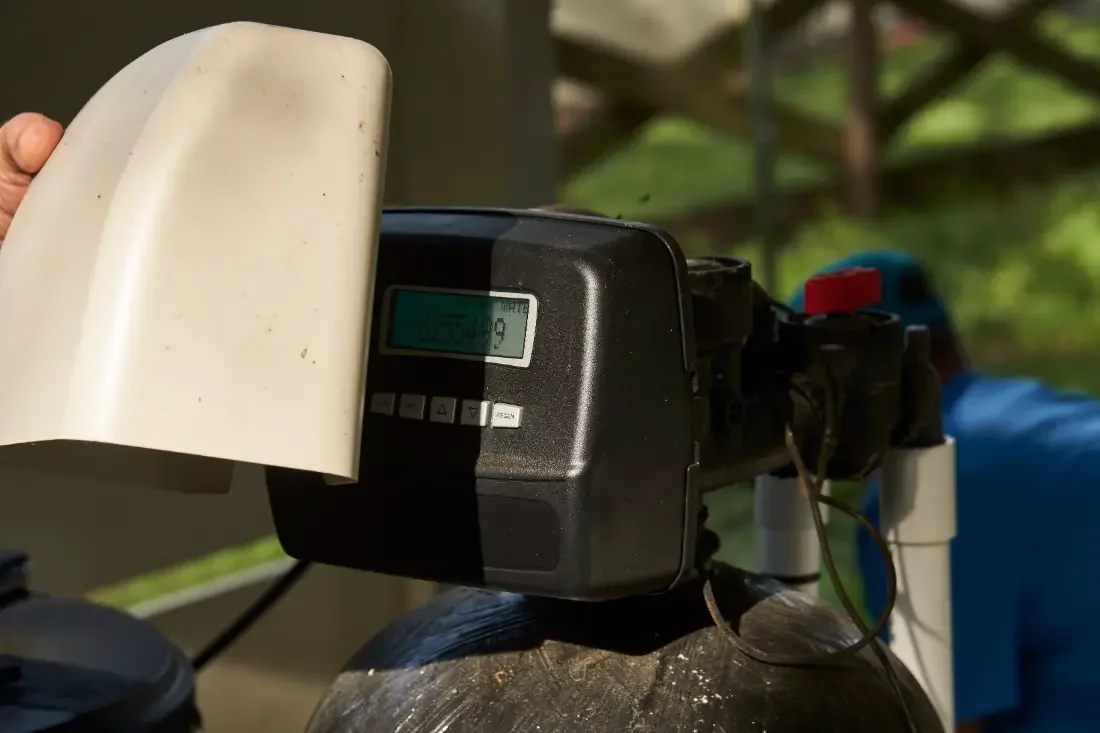
The overwhelming majority of short-cycling cases come down to the pressure tank, so it's worth understanding how the tank is supposed to work. Inside the tank is a cushion of compressed air, separated from the water (in modern tanks, by a rubber bladder). That air is what stores pressure: as the pump fills the tank, the air compresses; as you use water, the air pushes it back out, holding pressure steady without the pump running.
When the tank becomes "waterlogged," it has lost that air charge — the air cushion is gone, and the tank fills almost entirely with water. With no air to compress and store pressure, the tank can only hold a tiny bit of pressurized water. So the moment you open a tap, the pressure plummets, the switch tells the pump to run, the tiny capacity fills instantly, and the pump shuts off — over and over. A waterlogged tank is the single most common reason a well pump short cycles.
A related failure is a ruptured bladder. In bladder-style tanks, if the bladder tears, water and air mix, the tank loses its ability to hold a proper charge, and you get the same rapid cycling. Sometimes a waterlogged tank can be recharged with air; a failed bladder usually means the tank needs replacement.
The Other Causes Worth Checking
While the tank is the prime suspect, a few other problems can cause or mimic short cycling.
A faulty pressure switch can cut in and out at the wrong points, telling the pump to start and stop too frequently. A clog or restriction — in a filter, the screen, or piping — can cause pressure to spike and drop erratically, triggering rapid cycling. And a leak in the system or a waterlogged condition, combined with a leak, can make the pump chase a pressure it can never hold. These are less common than a waterlogged tank, but a technician will check them when the tank alone doesn't explain the behavior.
| Cause | What's happening | Typical fix |
|---|---|---|
| Waterlogged pressure tank | Lost air charge; can't store pressure | Recharge the tank's air |
| Failed tank bladder | Bladder torn; air and water mix | Replace the tank |
| Faulty pressure switch | Cuts in and out at wrong pressures | Switch repair or replacement |
| Clog or restriction | Pressure spikes and drops erratically | Clear filter, screen, or line |
| Leak in the system | Pump chases pressure it can't hold | Find and repair the leak |
Why You Shouldn't Let It Run
Short cycling isn't just an annoying sound — it's actively shortening your pump's life. Every time a pump motor starts, it draws a current surge and endures mechanical stress, and motors are built to handle a reasonable number of starts, not a constant barrage. A short-cycling pump may start hundreds of extra times a day, and that relentless starting overheats and wears the motor until it burns out far ahead of its time. What begins as a cheap tank fix becomes, if ignored, a failed pump and a far bigger repair.
If you hear your pump rapidly clicking on and off, the fastest thing to check is the pressure tank. Tapping the side of the tank can hint at the problem — a healthy tank sounds hollow up top (air) and solid at the bottom (water), while a waterlogged tank sounds solid almost all the way up. Diagnosing and recharging it, though, is best left to a pro to set the pressures correctly.
Because the damage accumulates with every cycle, short cycling is one of those problems where speed really saves money. Catching it while it's still just a waterlogged tank means a simple repair; letting it run for weeks risks taking the pump motor down with it.
Frequently Asked Questions
Short cycling is when the pump turns on and off rapidly in quick bursts instead of running in normal, spaced-out cycles. In a healthy system, the pump runs, fills the pressure tank, and then rests while you use the stored water. When it short cycles, it can't stay off — it fires every few seconds. It usually means the system has lost its ability to store pressure, most often because of a waterlogged pressure tank.
A waterlogged tank has lost its air charge, and the fix depends on the cause. If the tank's air simply bled off, it can often be recharged with air to the correct pressure, matched to the pressure switch setting. If the internal bladder has failed, the tank usually needs to be replaced. Setting the air charge correctly matters, so it's typically best handled by a professional who can match it to your system.
Yes, and fairly quickly. Each motor start draws a current surge and stresses the pump, and motors are designed for a limited number of starts. Short cycling can add hundreds of extra starts a day, overheating and wearing the motor until it burns out well before its time. That's why short cycling should be fixed promptly — the cheap tank repair prevents an expensive pump failure.
It can. A faulty or misadjusted pressure switch may cut the pump in and out at the wrong pressures, causing it to start and stop too frequently. It's less common than a waterlogged tank, but worth checking, especially when the tank appears healthy. A technician can test the switch and the tank together to pinpoint which one is driving the rapid cycling.
It's not an emergency in the sense of losing all your water immediately, but it shouldn't wait long. Because the rapid cycling actively wears the pump motor every minute it runs, leaving it unaddressed risks turning a minor tank repair into a major pump replacement. Treat it as something to fix soon rather than something to monitor indefinitely.
Fix the Tank Before It Costs You the Pump
A short-cycling well pump — clicking on and off in rapid bursts — has almost always lost its ability to store pressure, and the usual reason is a waterlogged pressure tank or a failed bladder. A faulty switch, a clog, or a leak can cause it too. Whatever the source, the rapid cycling punishes the pump motor with constant starts and will burn it out if left alone. That makes short cycling a fix-it-now problem: a quick tank repair today prevents a failed pump tomorrow.
Hearing your well pump click on and off nonstop? — Get the pressure tank and switch checked before the short cycling burns out your pump. Pump Repair Services serves Orlando, Winter Park, Apopka. Call (407) 625-5499.