Constant Pressure System or Bigger Tank? How to Decide
Two showers running at the same time as a load in the washing machine, and pressure at every one of those fixtures visibly drops. An irrigation zone kicking on can do the same thing to pressure indoors. Whether a bigger pressure tank or a different kind of pressure system altogether actually fixes that depends on which of two very different problems is causing it, and standing at the faucet, they feel identical.
Sorting Out Which Problem You Actually Have
The first problem is pressure that swings noticeably even under ordinary, one-fixture-at-a-time use, climbing and falling in an obvious rhythm as the pump cycles on and off. That is a tank and switch sizing issue, and a bigger tank actually helps. The second problem is pressure that holds steady fine under normal use but sags specifically when several fixtures draw water simultaneously. That is a supply-rate problem: the well and pump can only deliver so many gallons per minute, and once total demand exceeds that rate, no amount of stored water in a tank changes the math for more than a few seconds. Telling these apart before choosing a fix is what actually matters here.
What a Bigger Pressure Tank Buys You
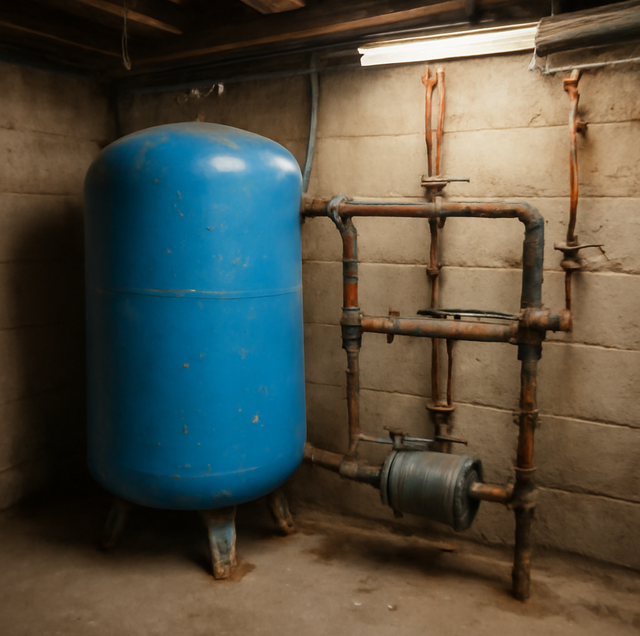
A pressure tank stores a cushion of water under compressed air, and the volume you can draw between the pump's cut-out and cut-in pressure settings before it has to restart is called drawdown. A larger tank holds more drawdown, which means longer pump run times, fewer starts per day, and a gentler cycling pattern for ordinary household use. That is a real, worthwhile upgrade on its own, and it solves pressure that swings uncomfortably during single-fixture use or a system that cycles far more often than it should.
What a bigger tank cannot do is create water the well and pump were never capable of delivering in the first place. Drawdown only postpones the sag; if four fixtures together demand more gallons per minute than the pump can supply, a bigger tank buys a few extra seconds of full pressure before the same sag arrives, since the tank's reserve still empties at whatever rate demand exceeds supply.
What a Constant-Pressure System Does Instead
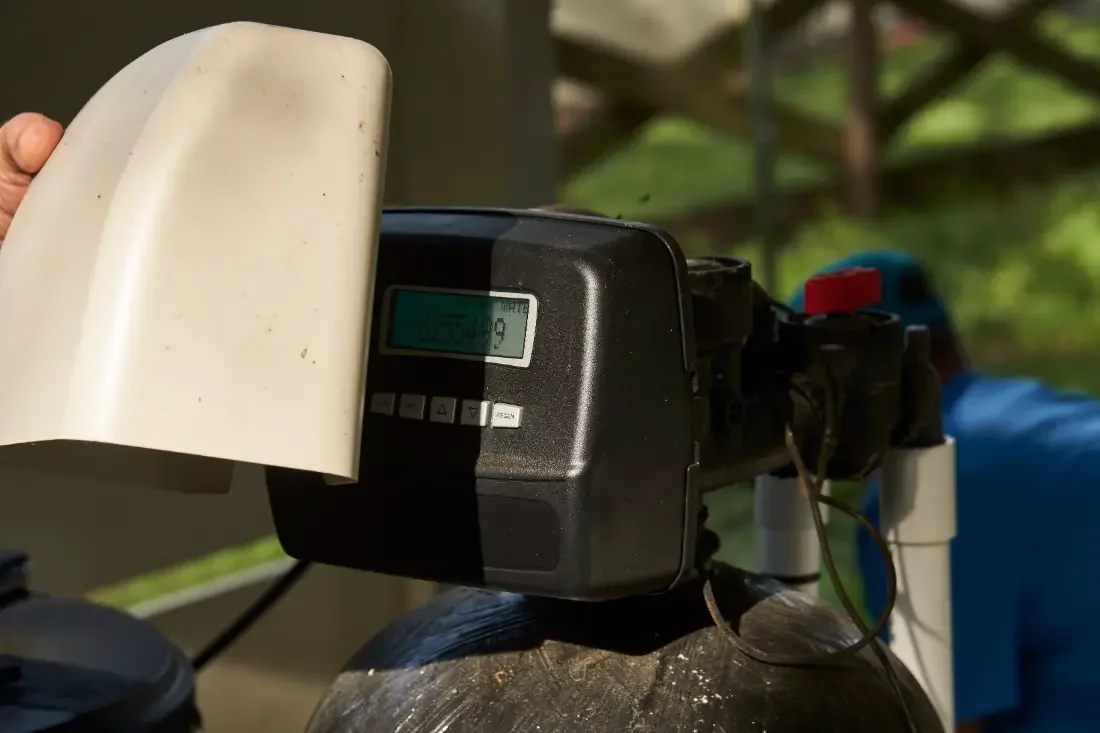
A constant-pressure system replaces the simple on/off pressure switch with a variable-frequency drive, a controller that continuously adjusts how fast the pump motor spins to hold one exact target pressure no matter how much or how little water is being drawn at that instant. Instead of cycling between a cut-in and cut-out point, the pump ramps up and down in real time as a pressure transducer feeds it constant feedback, so pressure at the fixture stays essentially flat whether one tap is open or five.
This does not increase how much water the well can physically produce. It changes how the available flow is delivered, matching pump output to demand instant by instant rather than letting demand outrun a fixed-speed pump between cycles. For a home where several fixtures regularly run together, that steady delivery is the difference a bigger tank alone cannot provide.
Comparing the Two Directly
| Bigger Pressure Tank | Constant-Pressure (VFD) System | |
|---|---|---|
| What it changes | Stored drawdown volume between pump cycles | How fast the pump runs, moment to moment |
| Fixes pressure swings from normal single-fixture use | Yes | Yes, as a side effect |
| Fixes sag from several fixtures running at once | Only if the pump's total gpm output was already adequate | Yes, if the pump's total gpm output is adequate |
| Fixes a well or pump that cannot supply enough gpm overall | No | No |
| Pump cycling pattern | Fewer, longer runs | Runs continuously at variable speed while demand exists |
| Added components | Tank only | Controller, transducer, often a small buffer tank |
When a Bigger Tank Is the Right Call
If a technician's testing shows the well and pump can comfortably supply the household's typical simultaneous demand, and the complaint is really about a tank cycling too often or pressure dipping noticeably even during ordinary single-fixture use, sizing up the tank alone is often the simpler, adequate fix. There is no reason to add a controller and transducer to solve a problem that stored drawdown already resolves.
When Only a Constant-Pressure System Actually Solves It
A home with several bathrooms, an irrigation system on the same well, or any layout where multiple fixtures routinely run together is often asking for more instantaneous flow than the pump was ever sized to deliver continuously. In that situation, a bigger tank only buys a few extra seconds before the same sag returns, because the underlying limit is the pump's maximum output, not the tank's reserve. A constant-pressure system works within that same ceiling, but by ramping the pump to match demand instant by instant rather than snapping between two fixed points, it keeps pressure comfortable across simultaneous use for far longer than a fixed-speed pump and any size tank can manage.
Frequently Asked Questions
Not usually. Most VFD-based systems still pair with a small buffer or precharge tank, considerably smaller than a standard tank, to prevent the pump from ramping rapidly at very low flow rates like a single dripping fixture. The controller and transducer do the bulk of the pressure regulation, but a small tank still smooths out the extreme low end of the flow range.
No, and this is the most common misunderstanding about these systems. If a flow test shows the well's actual yield is the real ceiling, the fix has to address that directly, evaluating whether the well's recharge rate is actually what limits the property's peak demand, or whether the existing pump is undersized for a well that can actually supply more than it is currently being asked to deliver. Adding pressure control on top of a supply that is already maxed out just spreads the same limited flow more smoothly; it does not create more of it.
A booster pump addresses a different scenario: pressure that has dropped because water is traveling a long distance or up in elevation from an already-adequate source, most commonly on a municipal supply. On a well system, the bottleneck is usually the well's yield or the pump's rated output rather than distance or elevation loss, so a booster pump added downstream of a well pump that is already at its limit will not create flow that was not there to begin with.
A larger tank holds more usable drawdown, meaning more gallons available before the pump has to restart, but that only helps if the pump can still refill the tank fast enough between draws to keep up with ordinary use. If the pump's fill rate is already behind demand, a bigger tank changes how quickly the shortfall shows up, not whether it happens.
Yes. A standard system uses a mechanical pressure switch that simply opens and closes contacts at two set points. A constant-pressure system replaces that with a pressure transducer, which has no moving contacts to pit or wear the way a mechanical switch's do, and reads pressure many times per second rather than only at the two trip points. The trade-off is that a transducer can drift out of calibration gradually rather than fail outright, so it benefits from being checked against a reference gauge periodically instead of being assumed accurate indefinitely.
There is a different maintenance profile rather than simply more work. A standard tank and switch mainly need the tank's air precharge checked periodically. A constant-pressure system adds electronic components- the drive controller, the transducer, and any small buffer tank- that benefit from periodic inspection to catch a failing sensor or a drive fault before it affects pressure, on top of the same basic pump and well maintenance either system needs.
Matching the Fix to the Actual Problem
The only reliable way to know which category a home falls into is a static and flowing pressure test at multiple fixtures with several running at once, which shows whether pressure is limited by cycling behavior or by the pump's actual gpm ceiling. Guessing based on which fix sounds more advanced, or defaulting to whichever one a previous technician installed somewhere else, skips the one test that actually answers the question.
If pressure sags whenever more than one fixture runs, have a pressure test done at several fixtures at once - it is the only way to know whether a bigger tank or a constant-pressure system actually matches your problem. Pump Repair Services serves Apopka and the surrounding Central Florida area. Call (407) 625-5499.