What Happens When You Call for Emergency Well Service
What actually happens in the minutes after you dial an emergency well number at 2 a.m.? Most people calling for the first time picture a truck simply pulling out of a lot, but there's a whole sequence of triage, dispatch, and diagnosis that happens first, and most people have no idea what that sequence looks like until they're in the middle of it. Understanding the mechanism behind an emergency response, not just the fact that someone answers the phone, makes the process a lot less stressful the one time you actually need it.
What Happens During the Call Itself
An emergency call starts with a triage conversation, not a truck pulling out of a lot. Whoever answers is trying to figure out three things quickly: whether the household has any water at all right now, what the system was doing right before it failed, and whether there's a safety concern, such as exposed wiring or standing water near an electrical panel.
That triage matters because it determines dispatch order. A house with zero water and a family on-site gets prioritized differently than a system that's still producing water but at reduced pressure, even if both calls come in around the same time. The questions asked during that first call also shape what the technician expects to find, so a clear answer about when the problem started and what changed right before it (a storm, a power flicker, unusually heavy water use) often points the technician toward a specific system before the truck even arrives.
What a Technician Brings to a Midnight Call
Emergency trucks carry a different inventory than those for scheduled service calls. Along with common failure parts, pressure switches, capacitors, control boxes, and check valves, they typically carry a portable generator or a battery pack sufficient to run diagnostic equipment and, in some cases, temporarily power a pump long enough to restore water while a permanent part gets sourced.
That inventory exists because a large share of emergency calls involve one of a handful of common failures rather than something exotic, so carrying parts for those common failures means many emergency calls get resolved on the first visit rather than requiring a follow-up trip. A truck stocked for emergency response also typically carries a range of wire sizes and splice kits, since a damaged connection at the wellhead is one of the more common causes of a system suddenly losing power for no obvious reason.
How Diagnosis Works Differently in the Dark
Diagnosing a well system problem at night involves the same electrical testing a daytime call would use, checking voltage at the pressure switch, testing continuity through the motor windings, and verifying the breaker is actually delivering power, but with less natural light and often less certainty about what was normal for that particular system beforehand.
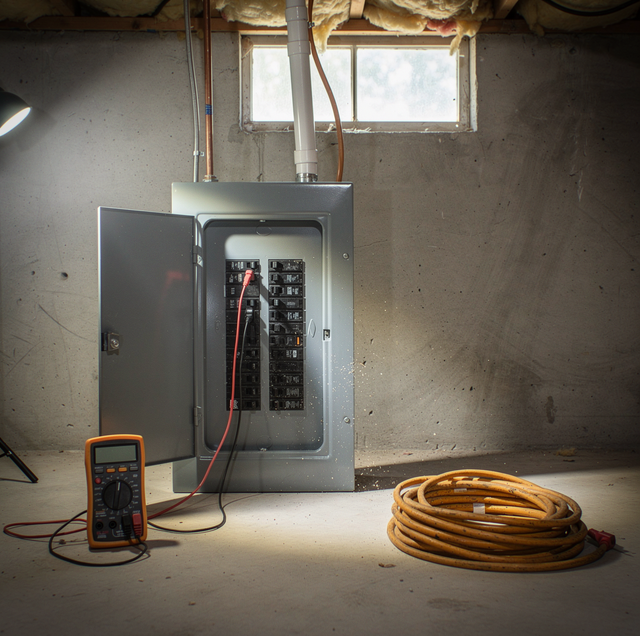
A technician working an emergency call relies more heavily on process of elimination: testing power at the panel first, then at the pressure switch, then at the wellhead itself, narrowing down where in the chain the failure sits rather than assuming from the symptoms alone. Working methodically through that chain matters more at night than during the day, since a rushed guess in poor light is more likely to miss a secondary problem sitting behind the obvious one.
Why Some Emergency Fixes Are Temporary
Not every emergency repair is meant to be the final one. If a part needed to fix the actual failure isn't something carried on the truck, a technician may install a temporary fix, a jumper wire bypassing a failed relay, a spare pressure switch swapped in place of a fried one, or a loaner pump run above ground, specifically to restore water immediately while the correct permanent part gets ordered and installed during a scheduled follow-up.
That temporary fix isn't a shortcut; it's a deliberate choice to prioritize restoring water over waiting for the exact right part to arrive. A good technician explains exactly what was bypassed and why, along with a specific timeframe for the follow-up visit, so the household knows the difference between a finished repair and a stopgap holding things together.
What Happens After the Immediate Problem Is Solved
Once water is running again, whether through a permanent repair or a temporary fix, the call isn't over. A thorough emergency response includes checking the rest of the system for related damage, verifying the pressure tank is holding air properly, checking wire splices at the wellhead for corrosion or looseness, and noting what failed and why, so that if a temporary fix was used, there's a clear plan for the follow-up visit rather than hoping the household remembers to call back.
This closing check also catches secondary damage that didn't cause the original outage but could cause the next one. A corroded splice that hasn't failed yet, or a pressure tank running slightly low on air, often gets flagged during this step precisely because the technician is already looking closely at every component while everything is exposed and accessible.
Why Response Time Varies Even Within a 24-Hour Service
A 24-hour service doesn't mean every call receives the same response time. Overnight calls typically involve fewer technicians on active shifts than daytime hours, and triage means a house with zero water gets dispatched ahead of a system still producing reduced pressure. Weather also plays a role: a widespread storm that's knocked out several wells in the same area at once stretches response time across every active call, since the same technicians are covering more emergencies than usual.
What Determines Whether a Repair Happens on the First Visit
Whether an emergency call gets fully resolved on the first trip usually comes down to two things: whether the failed part is one commonly carried on the truck, and whether the failure is isolated or part of a broader pattern affecting multiple components at once. A single failed capacitor or pressure switch is almost always resolved on the spot. A failure that traces back to a compromised drop cable, a cracked well casing, or a motor that needs to be pulled and rebuilt typically can't be finished in one overnight visit, since that kind of repair needs daylight, additional equipment, or a part that isn't standard truck stock.
What a Follow-Up Visit Usually Covers
When an emergency call ends in a temporary fix rather than a permanent one, the follow-up visit isn't just a repeat of the same diagnosis. The technician arrives already knowing what was bypassed and why, so the visit typically starts by installing the correct permanent part, then rechecking the temporary workaround to confirm it didn't cause any secondary wear while it was in place. A jumper that bypassed a relay, for instance, is removed, and the relay's replacement is tested under normal operating conditions before the technician considers the repair complete, rather than assuming the part swap alone completes the job.
Frequently Asked Questions
Shutting off the main breaker to the well isn't usually necessary and can complicate diagnosis if it removes a symptom the technician needed to see. It's more useful to note exactly when the water stopped, what was running at the time irrigation, multiple fixtures, laundry, and whether there were any storms or power flickers beforehand, since that timeline often narrows down the cause faster than any troubleshooting done before help arrives.
An emergency call skips the normal scheduling queue and dispatches based on triage rather than appointment order, and the technician typically travels with a broader parts inventory than a routine visit since there's no advance notice of what specifically failed. A same-day scheduled call still holds its place in the day's appointment order and can get pushed later if the schedule fills up, while a true emergency, especially a total loss of water, can bump ahead of calls already on the board rather than waiting its turn.
A tripped breaker or a failed pressure switch accounts for a large share of sudden total-water-loss calls, since both can happen instantly rather than building up gradually the way a worn-out motor typically does. That's part of why triage conversations ask about breaker status early.
It can, particularly a jumper bypassing a safety relay, which restores function but removes a protection the system relies on to prevent overheating or damage during future faults. That's why a temporary fix should always come with a scheduled follow-up to install the correct permanent part.
Because electrical surges from nearby lightning are one of the more common hidden causes of sudden pump or control box failure, and that history changes what a technician checks first, focusing on the motor windings and control box rather than assuming a worn-out part failed on its own.
Availability is continuous, but response time still depends on triage priority, current call volume, and conditions like a storm affecting multiple properties at once. A total loss of water is prioritized ahead of a system still producing reduced pressure, even during the same overnight window. When several calls come in about the same storm, dispatch will usually give a realistic time estimate rather than a guess, and call back if that estimate changes, instead of leaving a household guessing how long the wait will actually be.
An emergency call is really a series of fast decisions: which household gets dispatched first, what's likely wrong based on a handful of questions, whether a temporary fix buys enough time to source the right part, and what needs a second look once water's flowing again. None of that happens by accident, and knowing the mechanism behind it, rather than just the phone number, makes a 2 a.m. call feel a lot less like a gamble.
Water stopped running, and it can't wait until morning? — Reach a technician who carries the parts and equipment to restore water on the first visit, day or night. Pump Repair Services serves Orlando, Winter Park, and Apopka. Call (407) 625-5499.