Chlorine Taste in City Water: Why Your Tap Tastes Like a Pool
You fill a glass at the kitchen tap, raise it, and the smell reaches you before the water does: sharp, clean, and a little like the deep end of a public pool. Nothing looks wrong, and the water runs perfectly clear. The first sip carries the same note. Your ice cubes have it, and so does the steam rising off your shower.
That flavor is not a fault in your plumbing. It is a disinfectant your water utility intentionally adds, and it comes in two forms that behave differently once the water reaches your house. Which one you have affects how long the taste stays in your water and what you need to remove it at every fixture you use.
Why a Utility Leaves Disinfectant in the Water
Treated water still has miles of pipe to cross after it leaves the plant, and the disinfectant is meant to accompany it. Chlorine gets used up as it travels, and without enough dosed at the start, too little would be left to keep killing germs by the time the water reaches your tap.
So the dose is set to leave something over at the far end of the system. A small amount of disinfectant still riding in the water when it comes out of your faucet is the intended result, not a leftover from careless treatment.
That is also why a pitcher of tap water can smell of it on an ordinary day. The utility is not adding more to your street than to anyone else's. Your nose is picking up the residual that was supposed to survive the pipes.
Chlorine and Chloramine Are Two Different Disinfectants
Most people assume their tap water holds chlorine, and many systems do use it as their primary disinfectant. Some public water systems have switched their secondary disinfectant to chloramine instead, to meet disinfection byproduct rules.
Chloramine is built from chlorine. It forms when ammonia is added to chlorine to treat drinking water, and the combination is designed to remain stable as it travels through pipes to consumers. Utilities choose it for the same reason: it stays stable for longer periods and takes longer to break down across a distribution system.
The two do not come across the same way in a glass either. Water treated with chlorine can taste and smell different from untreated water or water treated with chloramine. Both belong to the same chemical family, so either one can put a pool note in your water, but the longer life that makes chloramine attractive to a utility is also what makes it harder to get rid of at the house.
Which of the two arrives at your house is the utility's call, made for the whole system, and it can change. Treatment at the house has to match whichever one is actually in the pipe on the day it goes in.
The Pool Comparison, and Where It Stops
The word "pool" is the one most people reach for, and for good reason: it's familiar chemistry. A swimming pool is the place most noses first learn what chlorine-treated water smells like, so a whiff of the same family at the kitchen sink gets filed under the same heading. Most people have smelled a pool far more often than they have smelled a treatment plant, so the pool is the reference memory reaches for first.
The comparison holds as a description of a sensation and no further. Chloramines are a type of combined chlorine that forms in water and then off-gasses into the air above it, which is why the sharp "chlorine" smell at a pool is often actually chloramine that has built up there.
That distinction is what keeps the comparison honest: the chloramine that forms in pool water is different from the chloramine that is sometimes used to treat drinking water. Pool chloramines form naturally in the pool. The chloramine in treated city water is added deliberately, in a small and controlled amount. So a pool-like taste at your tap does not mean you are drinking pool water chemistry. It means your senses recognize a relative rather than a twin.
What Lingers at the Shower and the Ice Maker?
A filter pitcher or a faucet-mounted cartridge treats only the water that passes through it. Every other outlet in the house still delivers the disinfectant at full strength, which is why the taste can seem to follow you from room to room.
Think about where tap water actually ends up in a day. The refrigerator fills its ice tray from its own line. The shower runs warm water into a closed room where the smell rises with the steam. The coffee maker, the pot on the stove, and the glass rinsed at the bathroom sink all draw water that never went near the pitcher. Even a pitcher that works perfectly well is refilled from the same tap, and its cartridge only ever sees what you pour through it.
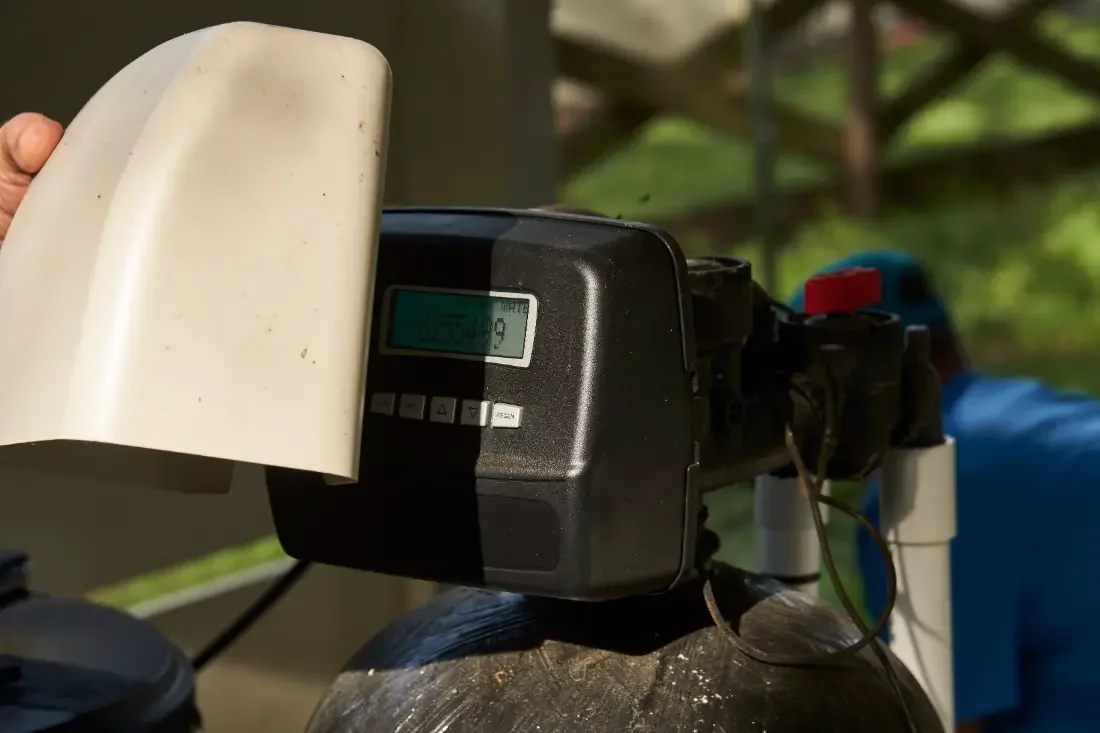
Whole-house carbon treatment closes that gap. It removes the chlorine or chloramine taste and odor for every fixture, not just for a filtered pitcher. Treating the water where it enters the house, instead of at one faucet, means the kitchen tap, the ice maker, and the shower all lose the pool note together, and nobody has to remember which spout is the filtered one.
Before anyone recommends carbon, check your utility's annual water quality report or call and ask which disinfectant it uses, chlorine or chloramine, and write the answer down so the installer can match the media.
Why the Carbon Has to Match the Disinfectant
Carbon removes disinfectant taste, but not every carbon filter handles both disinfectants equally well, and a pitcher cartridge reaches the same limit at its own scale. Almost any activated carbon in point-of-use devices will remove chlorine taste and odor, but it takes special activated carbon to remove chloramine.
The same persistence that makes chloramine useful to the utility makes it harder to strip out at the house. The review ties better chloramine removal to longer contact time between the water and the carbon bed. Contact time is easy to picture. Water has to spend long enough moving through the carbon for the reaction to finish, rather than rushing past it at the flow rate of a running shower.
That is why a whole-house system is sized to the water it will see. A tank that is plenty for chlorine can let chloramine taste slip through when two showers and a washing machine run at once, because the water is moving through the bed faster than the media can work on it. The fix is in the choice of media and the size of the bed, not in adding a second pitcher.
Chloramine is the more persistent of the two, so carbon treatment is sized to allow for it, and a well-built system is matched to what your utility actually uses. Getting that match right at the start is far easier than chasing a taste that keeps slipping through at the busiest hour of the morning.
What a Glass Left on the Counter Shows
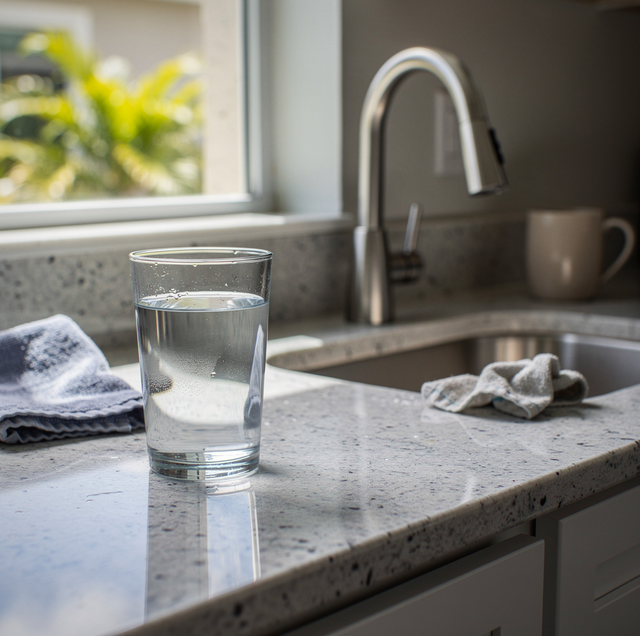
There is a simple observation you can make before anyone visits. Fill a glass at the kitchen tap, leave it uncovered on the counter, and smell it again after a few days.
Chlorine can dissipate from water left sitting out for a few days; chloramine does not clear the same way. Water that has lost its pool note after sitting out points toward chlorine. Water that still carries the note points toward chloramine, and toward carbon chosen and sized for it.
The glass is a clue, and the utility's own information is the one to trust. But it gives you a reason to ask the right question, and it shows you why a treatment that works on one disinfectant can leave the taste of the other sitting in your glass.
Frequently Asked Questions
Your utility may have switched disinfectants for a while. Pipes can grow a slimy film on their inner walls, and utilities may temporarily switch from chloramine to chlorine to help clear it. During that stretch, you taste chlorine, which tastes different in your glass, until the usual disinfectant returns to the mains.
No. Chloramines have been used by water utilities since the 1930s, and more than one in five Americans uses drinking water treated with chloramines. If your utility uses it, you are relying on a method nearly a century old.
It can. Water may have more taste or smell problems when it has higher levels of chlorine or more dirt and other particles in it. If your water looks cloudy at the same time the taste gets stronger, mention both details when you call about it.
Usually not for taste. With a properly treated whole-house system, a separate reverse-osmosis unit is usually unnecessary, so a good installer will not push one on you. Your kitchen tap is already drawing from the same carbon-treated water as every other fixture in your house.
No. Carbon has a working life and gets refreshed on a schedule based on your water and how much of it your household uses. The schedule gets laid out when the system is installed, so you know roughly when to expect the pool taste to creep back if a refresh is skipped.
Two things come first: your water's hardness and whether your utility uses chlorine or chloramine. Hardness shapes what else the water needs before any equipment goes in. A chloramine supply usually means catalytic carbon, the media type suited to it. Chloramine removal also improves as the carbon's mean particle diameter gets smaller, so grain size matters alongside bed size. Your household's peak water use counts too, because the bed has to keep up when several fixtures all run together.
Get a whole-house carbon system matched to your utility's disinfectant — a technician checks your hardness and whether your supply carries chlorine or chloramine, then sizes the carbon bed for your whole house. Pump Repair Services serves Orlando, Winter Park, and Apopka. Call (407) 625-5499.