Quick Answer: Every time a garage door goes up and comes back down, it completes one cycle, and a torsion spring is built to survive a set number of those cycles before the steel gives out from fatigue, absent rust or damage. That number is decided when the spring is manufactured by its wire, coil, and heat treatment. That figure is fixed at the factory and stays the same, regardless of how the door is installed. A door raised and lowered only a handful of times a day, and one that serves as a household's main entry point, can carry the same door weight yet draw down different amounts of that fatigue life from the spring underneath it. A standard-cycle and a high-cycle spring differ in four ways: how each is built, what a swap changes at the shaft, what it asks of the other hardware, and which daily use suits it.
| Factor | Standard-Cycle Spring | High-Cycle Spring |
|---|---|---|
| How it's built | Wire diameter and coil length sized to the door's weight at a baseline cycle rating | Heavier wire wound into a longer coil, or the load split across an added spring, so the lift still matches the same door weight |
| What changes on the shaft | One spring, or a matched pair, sized to fit standard bearing plates and cable drums | Can take up more shaft length or add a spring, sometimes calling for a longer shaft or an extra center bearing plate |
| What it asks of the door's hardware | Cable drums, rollers, and the opener sized for the door's typical daily trips | The same hardware still carries the load on its own wear schedule; a higher-rated spring doesn't slow down how drums, rollers, hinges, or opener gears age |
| Which door use fits | A door opened only a handful of trips a day, a door used only for pulling the car in and out | A door opened well beyond that count daily, such as a main household entry, a business overhead door, or a door on a shared driveway |
What a Cycle Rating Means
A cycle is one full trip: the door closes, then opens again, or opens then closes. Every torsion spring is designed around a cycle count, an engineering estimate of the number of those trips the coil can complete before metal fatigue works through the wire and it breaks. That number lives inside the spring's design, not in how the door gets used; a door that racks up more daily trips than the spring's rating anticipated spends down that fatigue life sooner. A cycle rating says nothing about how heavy a door the spring can lift; wire size, inside diameter, and length set that, so a standard and a high-cycle spring can both be sized for the same door. The rating only answers how many times that lift can be repeated.
How a High-Cycle Spring Is Built Differently
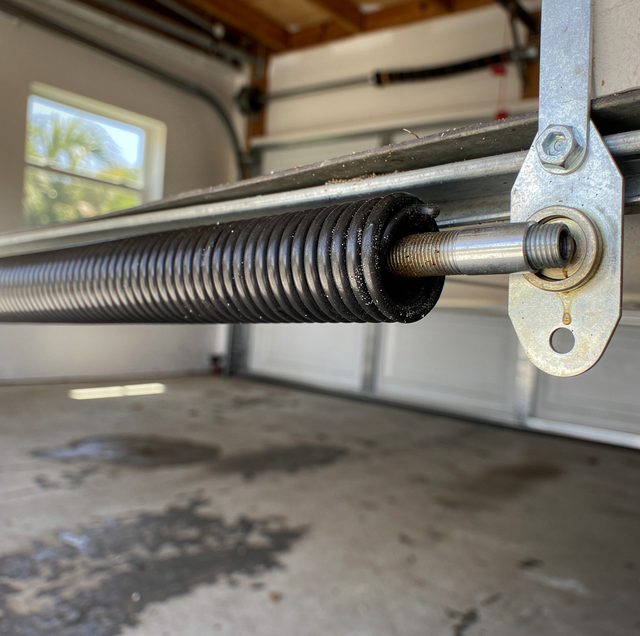
A high-cycle spring reaches a higher cycle count through the same handful of design choices as any torsion spring, just pushed further: a heavier-gauge wire paired with a longer coil so the lift stays matched to the door, or an added spring sharing the load. Wire thickness on its own increases how much weight a spring can lift, so a high-cycle spring only maintains the same lift as a standard one when the heavier wire is wound into a longer coil or when the load is split across more than one spring. They're built to spread that same tension across more material, so each wind puts less strain on any single point in the coil.
A torsion spring stores enough tension to injure someone badly if it's released without the right tools. Never loosen a set screw or attempt to wind, unwind, or remove a spring yourself — leave every swap to a trained technician.
Because a longer coil or an added spring takes up more room, a high-cycle setup can also change what's mounted on the shaft itself. A shaft built for one spring may need to be swapped for a longer one or to have a second center bearing plate added before a high-cycle spring or a second spring will fit correctly. That's a hardware decision a technician makes while measuring the door, a call the rating alone cannot make.
Counting How a Household Uses Its Door
A cycle rating only matters relative to how the door is used, and that goes unnoticed until someone counts it. A garage used only for the car sees a small number of trips: pull in, pull out, morning and evening. A garage that doubles as a household's main entry, that a delivery-heavy home uses throughout the day, or that opens for more than one vehicle stacks trips well beyond that baseline, even though nothing about the door itself looks any different from the outside. The way to tell them apart is a count: tallying the number of times the door opens and closes over a normal week gives a technician a real figure to size a replacement spring against, instead of assuming every door in a similar-looking garage gets the same use. A household running a home business out of the garage, one with drivers coming and going independently, or one with a side-door pet entry that still routes cars through the main door all push that weekly count higher without anyone thinking of the garage door as a high-traffic fixture.
What Else Wears When Springs Outlast the Hardware
A spring chosen to match how a door gets used solves one part of the wear picture, not all of it. The cable drums, the rollers, the hinges, and the opener's internal gears each wear on their own schedule, driven by the same cycle count that ages the spring, but made of different materials with different failure points. A high-cycle spring installed on a door whose rollers or cable drums were never inspected doesn't protect those other parts; it just means the spring stops being the first thing to fail. Rollers wear from friction against the track with every pass, cable drums see repeated flexing where the cable wraps and unwraps, and an opener's gears carry load every time the motor engages, all independent of whatever rating is built into the spring overhead. Matching a spring to use is worth doing on a heavily used door, but it's just one piece of a larger picture, and the rest of the hardware deserves the same attention.
How the Choice Gets Made
Deciding between the two comes down to three things a technician checks together: the door's weight, which sets the base tension the spring has to counterbalance regardless of rating; the household's use pattern, tallied rather than assumed; and the condition of the shaft, drums, and bearing plates that will need to accept whatever spring gets installed. Checking all three together keeps the spring from being sized apart from the hardware it has to work with. A door with light, occasional use fits a correctly sized standard spring without needing the added coil or wire a high-cycle rating adds. A door that absorbs daily trips well above that baseline is a reasonable candidate for a higher rating, provided the shaft and hardware can accommodate it. Getting that match right is one part of keeping a replacement from becoming a repeat repair.
Frequently Asked Questions
No. The number of turns wound into a torsion spring is set by the door's height and the cable drum, not by the spring's cycle rating, so a longer high-cycle coil is wound the same number of turns as the standard spring it replaces.
They can. A rolling door is also balanced by torsion springs, but they sit inside the barrel the curtain coils around rather than on an open shaft over the opening, so a higher cycle rating there is built into the barrel assembly rather than swapped onto an exposed shaft.
By measured wire size, inside diameter, and coil length, the same way as any torsion spring, rather than by cycle rating on its own; a rating alone does not identify a spring that will balance the door.
It can. A thicker wire gauge sometimes calls for a larger winding bar than a standard spring, since the bar must seat securely in the cone without slipping under the added tension. That's one more reason spring work stays with a technician who carries the right tools for whatever wire size is installed.
Sometimes. A different spring, especially a longer coil or an added spring on the shaft, can change how much resistance the opener senses near the top and bottom of its travel, so the opener's force limits should be checked after a spring change.
No. The rating moves the break further out in trips, not the way it happens: either spring fails from fatigue across one coil, and a break while the door sits closed shows up when the next attempt to open it stalls.
Order a garage door spring replacement sized to how your door is used — the door's weight, its weekly trip count, and the shaft hardware are checked, and the spring's cycle rating is matched to all three. Phoenician Garage Door & Repair serves Phoenix and the Valley. ROC #316471. Call (602) 610-0112.