Why Your Well Pressure Tank Keeps Losing Air (and Wrecking the Pump)
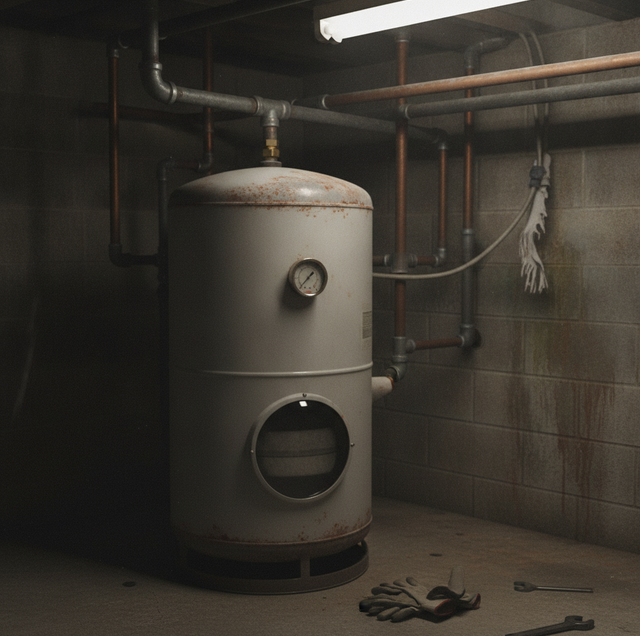
Your well pump kicks on, runs for a couple of seconds, shuts off, then fires right back up the moment you crack a faucet. The pressure gauge jumps around, the water spits, and something near the tank keeps thumping. That rapid on-off pattern almost always traces back to one thing: the pressure tank has lost its air charge.
Before you replace a pump or a switch, it helps to understand what the air in that tank is actually doing, because the air is the part that fails first, and it is the part that quietly destroys everything else when it goes.
Quick Answer: A well pressure tank holds an air charge that pushes stored water out to your faucets between pump cycles. When that air leaks away or gets absorbed into the water, the tank goes "waterlogged," and the pump short-cycles, snapping on and off every few seconds. The usual culprit in a modern tank is a ruptured bladder, which means the tank needs replacing, not just refilling.
What the Air in Your Pressure Tank Actually Does
A pressure tank is not just a holding jug for water. Inside a modern tank, there is a rubber bladder or diaphragm, and on the other side of it sits a sealed pocket of compressed air called the pre-charge. Older tanks skip the bladder and hold an air cushion directly on top of the water.
Think of that air like the springs under a car. The wheels ride the road, but the springs are what absorb the bumps, so you are not slammed every time the surface changes. In a pressure tank, the water is the wheels, and the air is the springs. When you open a tap, the compressed air expands and shoves stored water out to the house. The pump does not need to start until enough water has left the tank for the pressure to drop to the cut-in point. That air cushion is the entire reason your pump gets to rest between draws instead of running every single time you rinse a plate.
Take the air away, and the springs are gone. Every small draw of water drops the pressure instantly, the pump slams on to catch up, then shuts off the second the tap closes. That is the short-cycling you are hearing, and it is rough on the whole system.
What "Waterlogged" Means and Why It Wrecks the Pump
When a tank loses its air, water fills the space the air used to occupy. The tank is now "waterlogged," meaning it is full of water with little or no air cushion left. A waterlogged tank cannot store pressurized water, so it cannot buffer the pump.
Here is the chain of damage. With no cushion, the usable water volume in the tank shrinks from gallons down to almost nothing. The pump has to cycle to satisfy even a trickle. Each start pulls a surge of current and heats the motor, and motors are built to tolerate only so many starts per hour. The pressure switch, which is a set of spring-loaded contacts that snap open and closed, gets hammered through thousands of extra cycles and burns its points. Left alone, a waterlogged tank can chew through a pressure switch in weeks and take years off a pump that should have lasted a decade or more.
That is why "my tank lost its air" is not a cosmetic complaint. The lost air is the cause; the burned switch and the tired pump are the bill that arrives later.
Why Tanks Lose Air in the First Place
There are a handful of specific reasons the air disappears, and knowing which one you have decides the difference between a recharge and a replacement.
A ruptured or leaking bladder: This is the number one cause in modern tanks. The rubber bladder that separates air from water tears or perishes, the two sides mix, and water floods the entire tank. There is no air cushion left to restore because there is no longer a sealed chamber to hold it. A tank in this condition gets replaced.
A bad air-fill (Schrader) valve: The tank has a valve on top identical to the one on a car tire. If that valve leaks, the pre-charge slowly bleeds off into the air, even though the bladder is fine. The tank empties of air over weeks and starts short-cycling. This one is often recoverable by resealing or replacing the valve core and recharging.
Air absorbing into the water in older tanks: On older galvanized air-over-water tanks with no bladder, air sits in direct contact with the water and slowly dissolves into it. This is normal physics for that design, not a defect. These tanks were built with an air-volume control or a snifter valve to replenish the cushion, and when that control fails, the tank waterlogs and needs manual recharging or an upgrade.
A leak at the tank fittings: A weep at the tank tee, a fitting, or the union can allow water and pressure to escape, mimicking or worsening air loss and keeping the pump cycling.
Some wells add their own stress. Sandy, iron-heavy well water is common, and grit and minerals can foul a Schrader valve or an air-volume control. The constant cycling that comes with waterlogging wears parts faster in an irrigation-heavy yard that runs the pump hard year-round.
The Tells: How to Recognize a Tank That Has Lost Its Air
You can usually spot a waterlogged tank without any tools:
- The pump kicks on and off rapidly, often every few seconds, instead of running a steady stretch and resting.
- Water pulses or spits at the faucet, and the stream surges rather than holding steady.
- The pressure gauge jumps and bounces instead of climbing and holding.
- You hear banging or hammering near the tank or in the pipes as the pump slams on and off.
- The tank feels heavy and full. Rap your knuckles on it from bottom to top. A healthy tank sounds solid at the bottom (water) and hollow near the top (air). A waterlogged tank sounds solid almost all the way up.
Any one of these is a hint. The rapid cycling, plus the solid-sounding tap together, is close to a confirmation.
How to Check the Pre-Charge Safely
Checking the air pressure is simple, but the order of operations matters, and so does the safety step.
First, relieve the pressure. Shut off power to the pump at the breaker or switch so it cannot start while you work. Then open a faucet or the tank drain and let the water pressure bleed all the way to zero. Reading the pre-charge with system pressure still in the tank gives you a false number, and servicing a pressurized tank is how people get hurt.
With the pump off and the pressure at zero, put a standard tire gauge on the air valve at the top of the tank and read it. The pre-charge should sit about 2 psi below the pump's cut-in pressure. For a common 30/50 switch, cut-in is 30 psi, so the pre-charge should read around 28 psi.
Now interpret what you see:
- Around 28 psi (2 below cut-in): the pre-charge is correct. Look elsewhere for the cycling.
- Low or zero air: the pre-charge has bled down. If the bladder is intact, it can often be recharged back to spec.
- Water sprays or dribbles out of the air valve: the bladder has ruptured. Water is where air should be. That tank is done and needs replacing, not recharging.
The Fix, Matched to the Cause
The right repair depends entirely on which failure you found:
- Bladder intact, pre-charge just bled down: recharge the air to about 2 psi below cut-in with the tank drained and depressurized, and reseal or replace a leaky Schrader valve if that was the path the air escaped through.
- Bladder ruptured (water at the air valve): replace the tank. There is no cushion to restore, and no amount of pumped-in air will hold once it mixes with the water.
- Older air-over-water tank waterlogged: re-establish the air cushion and repair the air-volume control or snifter, or upgrade to a modern bladder tank so the problem does not keep returning.
- Leak at the fittings: find and reseal the weeping joint, then recheck the cycling.
A word on scope. Reading a gauge and adding air with the power off is homeowner-level work. Pulling a pump, rewiring a switch, or diagnosing the electrical side is not. Well pump wiring carries enough current to be dangerous, and a pump hanging on a hundred-plus feet of pipe is heavy and awkward to handle. If the tank needs to come out or the pump and switch are involved, that is a job for a licensed pump technician.
Frequently Asked Questions
Shut off the power to the pump so it cannot start, then open a faucet or the tank drain and let the water pressure fall to zero. With the tank fully depressurized, press a standard tire gauge onto the air (Schrader) valve at the top and read it. The pre-charge sits about 2 psi below cut-in, so roughly 28 psi for a 30/50 switch and about 38 psi for a 40/60 switch. Check it when the tank is cool, since the trapped air reads a couple of psi lower in cold weather and can fool you into over-filling. Reading it while the system is still pressurized gives a falsely high number.
Press the stem inside the air valve at the top of the tank, the same way you would let air out of a tire. If air hisses out, the bladder is holding, and the two chambers are still separated. If water sprays or dribbles out instead, water has crossed into the air side, which means the bladder has failed. A ruptured bladder cannot be recharged, so that tank needs replacing rather than refilling.
A leaking Schrader valve only lets the pre-charge escape, so the bladder is still intact, and the cure is to reseal or replace the valve core and pump the air back up. A waterlogged bladder tank has lost the chamber itself; the bladder has torn, and there is no air cushion left to restore, so it gets replaced. The valve test tells them apart: air out the stem points to a valve issue, water out the stem points to a failed bladder.
A healthy tank stores a "drawdown," the usable gallons that leave the tank between cut-in and cut-out, and that reserve is what forces the pump to run a minimum stretch each time. Pump makers cap the number of starts per hour, and a proper drawdown keeps the pump under that limit. When the tank waterlogs, the drawdown collapses to almost nothing, so even a small draw drops pressure to cut in at once. The pump then slams on and off far more often than it was built for, which is what burns out the motor and switch.
To a degree, yes. In those tanks, the air sits directly against the water with no bladder, so it slowly dissolves into the water, and the cushion shrinks on its own. The design leans on a snifter valve and an air-volume control to re-admit a fresh gulp of air on each cycle, so a clogged snifter is usually why one of these tanks waterlogs. Clearing or replacing the snifter can restore it. The modern fix is retrofitting a small bladder tank, which keeps the air sealed away from the water so the charge holds.
Yes, and faster than most people expect. The pressure-switch contacts, the points, usually burn first from the rapid cycling, sometimes within a few weeks. The motor windings go next, as repeated starts pile on current and heat. A submersible pump tolerates fewer starts per hour than a shallow jet pump, so a submersible suffers sooner under the same cycling. Running a waterlogged tank for long can turn a simple tank swap into a full pump and switch replacement, which is why it pays to act as soon as the short-cycling starts.
Book a well and pump inspection — stop the short-cycling before it burns out your pump. Pump Repair Services serves Orlando, Winter Park, and Apopka. Call (407) 625-5499.