Low Water Pressure on a Well? Tracing the Cause
Quick Answer: Low water pressure on a well usually comes from one of a few points along the system: a waterlogged or failing pressure tank, a pressure switch set too low or wearing out, clogged filters, screens, or a sediment-fouled system, a failing pump that can't build pressure, or a clogged well screen and sediment from the well itself. Because a well pushes water through a chain of components, the fix is finding which point is choking the flow. Start with the easy checks — filters and tank air pressure — then move to the switch, pump, and well.
The shower that used to have real force now dribbles, the washing machine takes forever to fill, and two fixtures running at once means neither gets much. Low water pressure on a well is one of the most common complaints homeowners have, and it's frustrating because the cause isn't obvious from the tap. The pressure you feel at a fixture is the end result of a whole system working together, so weak pressure means something along that path is falling short. Tracing the path finds the problem.
Pressure Is a System, Not a Single Part
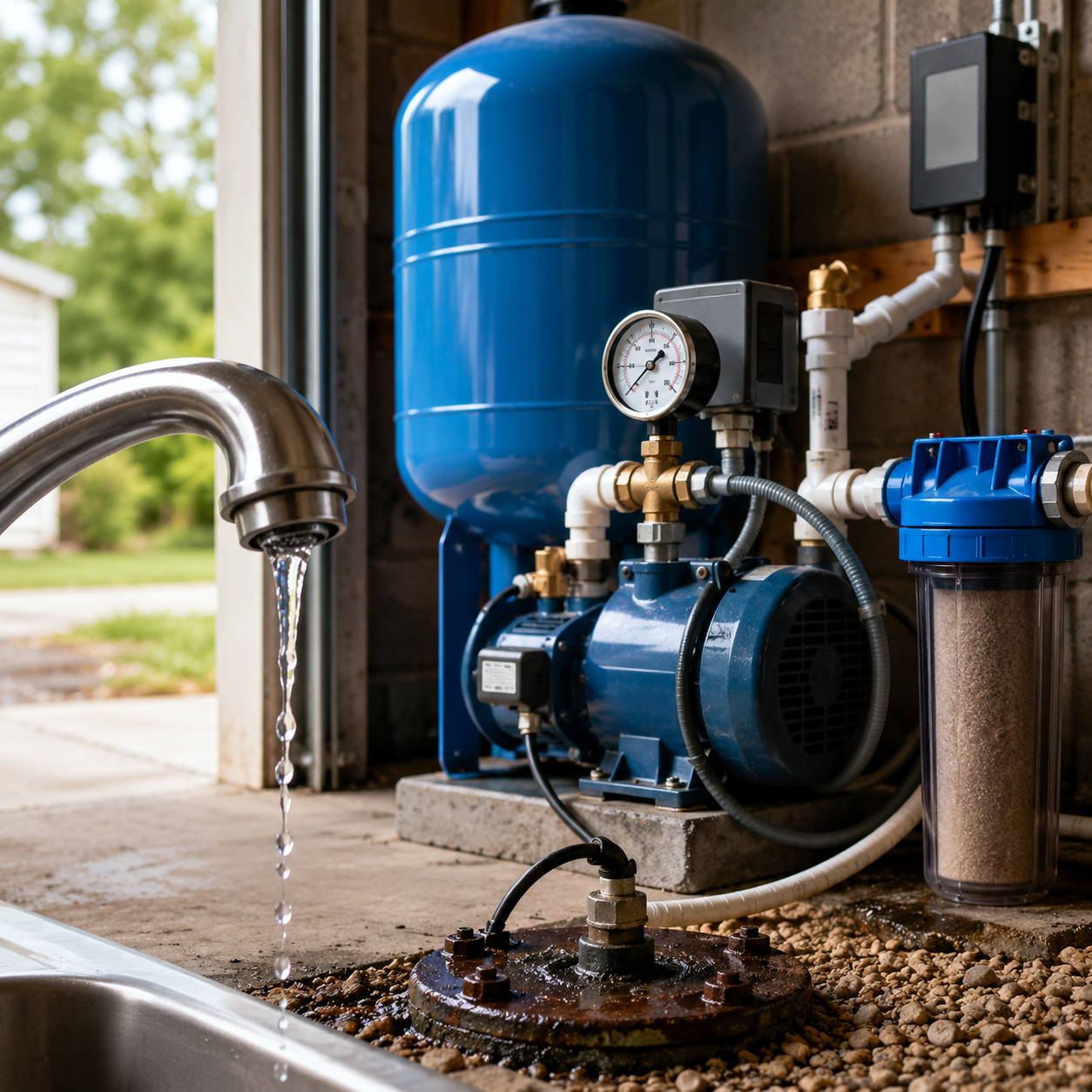
On a well, water pressure is created and maintained by several components in series: the pump builds pressure, the pressure tank stores it, the pressure switch controls the range, and filters and piping carry it to the house. Sediment from the well can foul any of it. Low pressure shows up at the faucet, but the cause lives somewhere upstream — so the smart approach is to walk the system from the easy, accessible parts toward the pump and the well, checking each link.
The Pressure Tank and Switch
A Waterlogged or Failing Pressure Tank
The pressure tank holds water under pressure using a cushion of air, so you have a steady flow without the pump kicking on every time you open a tap. When the tank loses its air charge — becomes "waterlogged" — or its internal bladder fails, it can't maintain pressure properly. You get weak, fluctuating flow and a pump that cycles on and off rapidly. A tank that has lost its air charge is a very common pressure culprit and one worth checking early.
A Pressure Switch Set Too Low or Wearing Out
The pressure switch turns the pump on and off at set pressures — commonly a range like 40 to 60 psi. If it's set too low, or if it's drifting and wearing out, the system runs at lower pressure than it should, and every fixture feels weak. Sometimes pressure simply needs to be checked and the switch evaluated; other times, the switch is failing and needs replacement.
Filters, Screens, and Sediment
Clogged Filters and a Fouled System
Well systems usually have filters, and Central Florida wells in particular pull sand and sediment that clog them faster than you'd expect. A dirty sediment filter or a fouled water-treatment component restricts flow and drops pressure throughout the house. This is one of the most common and most overlooked causes, and a neglected filter can choke an otherwise healthy system. Checking and replacing filters is a basic first step.
A Clogged Well Screen or Sediment From the Well
Down in the well, a screen keeps sand and grit out of the system. Over time, that screen can clog, and the well can start producing more sediment, both of which reduce the water actually reaching the pump and the house. Sandy Central Florida ground makes screen fouling and sediment a recurring issue, and addressing it may involve cleaning, screening, or servicing the well itself.
The Pump Itself
A Worn or Failing Pump
The pump is what creates the pressure in the first place. As a pump ages and wears, it loses the ability to build and sustain pressure, so even with everything else healthy, the whole system runs weak. A failing pump often shows up as gradually declining pressure over time, and it may be paired with other symptoms like sputtering or the pump running longer than it used to. Diagnosing and servicing the pump is a professional job, especially with a submersible unit deep in the well.
| Symptom | Likely cause | Where to look |
|---|---|---|
| Weak, fluctuating flow; pump cycles fast | Waterlogged or failed pressure tank | Tank air charge / bladder |
| Steady but low pressure everywhere | Switch set low or wearing out | Pressure switch |
| Pressure dropped, dirty filter | Clogged sediment filter or treatment | Filters/water treatment |
| Low flow plus visible grit | Clogged well screen, sediment | Well screen and the well |
| Slow, gradual pressure decline | Worn or failing pump | Pump (professional check) |
Note whether the low pressure came on suddenly or crept in gradually. A sudden drop points toward the tank, switch, or a clogged filter; a slow decline over months more often points to a wearing pump or a fouling well screen. That one detail narrows the search quickly.
Working From Easy to Hard
The practical order is to start with what's accessible and inexpensive. Check and change the filters first, since a clogged sediment filter is common and easy. Then have the pressure tank's air charge and the switch setting checked, since those govern how much pressure the system holds and delivers. If filters, tank, and switch are all good and pressure is still weak, the cause is likely deeper — a failing pump or a well screen and sediment issue — which is where a well professional takes over with the right diagnostics and equipment.
Frequently Asked Questions
Fluctuating pressure most often points to the pressure tank. When the tank loses its air charge or its bladder fails, it can't hold steady pressure between pump cycles, so flow surges and fades, and the pump kicks on and off rapidly. A failing pressure switch can cause erratic pressure, too. Having the tank's air charge and the switch checked is the usual starting point for fluctuating pressure.
Yes, significantly. A clogged sediment filter or fouled treatment component restricts flow and drops pressure across the whole house, and it's one of the most common and most overlooked causes. Central Florida wells pull sand and sediment that clog filters quickly, so they need checking and changing more often than many owners expect. It's the cheapest, easiest thing to rule out first.
A failing pump usually shows up as a slow, gradual decline in pressure over time, often alongside other symptoms like sputtering, air in the lines, or the pump running longer than it used to. If filters, the pressure tank, and the switch all check out but pressure is still weak, the pump becomes the likely suspect. Confirming it requires professional testing, especially for a submersible pump deep in the well.
Low pressure combined with visible sand or grit points toward the well itself — a clogged or failing well screen and increased sediment production. Sandy Central Florida ground makes this a recurring issue. The sediment both fouls filters and screens and reduces the water reaching your system. Addressing it may involve well screening, cleaning, or other well services rather than just swapping a filter.
The pressure switch can be adjusted, but it should be done carefully and within the system's safe range. The tank's air charge must be matched to the switch setting for it to work properly. Because getting it wrong can stress the pump or the tank, and because low pressure often has a deeper cause than the setting, it's usually best to have a professional check and set it rather than guessing.
Trace the Path to the Weak Link
Low water pressure on a well is a symptom with several possible sources along the system — a waterlogged tank, a low or worn switch, clogged filters, a fouled well screen, or a failing pump. Because the pressure at your tap is the end of a chain, the fix is finding which link is choking the flow. Start with the cheap, accessible checks like filters and tank pressure, then work toward the pump and well. Whether it crept in slowly or dropped suddenly is your best clue to where the trouble lives.
Tired of weak, fluctuating water pressure from your well? — Get the tank, switch, filters, and pump checked by a Central Florida well specialist. Pump Repair Services serves Orlando, Winter Park, Apopka. Call (407) 625-5499.